How to Pay Yourself as a Business Owner Without Tracking Every Dollar: The SpendFirst Method
Most business owners are working hard on the sales side of the business and quietly carrying a money story underneath it. They have invested in programs, certifications, coaching, and marketing, and the return is slower than they hoped. Then the follow-up email feels harder to send, the price feels harder to say out loud, and the business hits a ceiling that has very little to do with skill. The conventional fix is a budget that tracks where every dollar went last week, and for a busy owner that advice usually ends in a spreadsheet nobody opens.
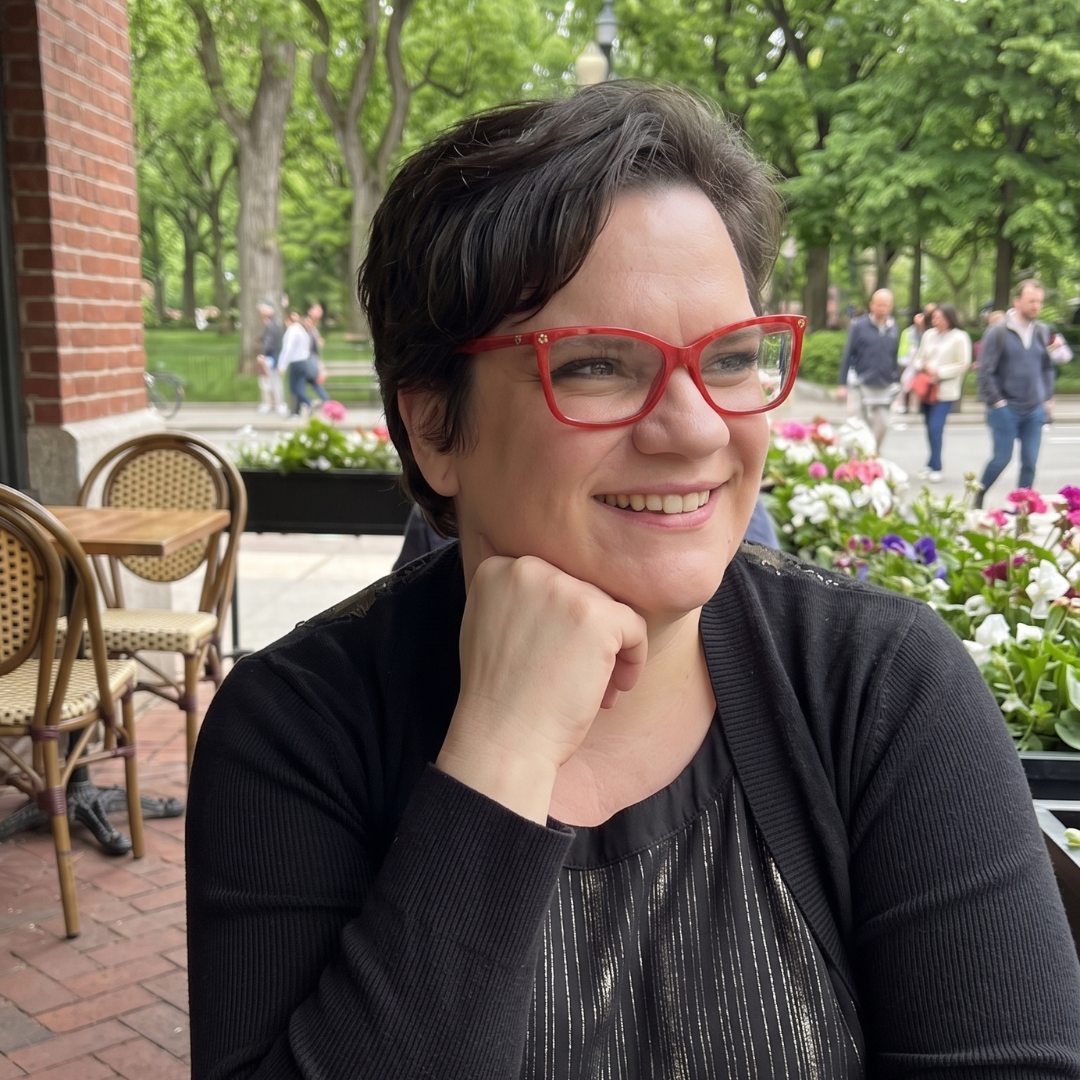
Kelsa Dickey is the creator of the SpendFirst methodology and the founder of Financial Coach Academy. She has spent nearly two decades coaching real clients through financial transformation, more than 1,000 people, helping them pay off $38 million in debt and save more than $112 million, and she has trained over 700 financial coaches through her programs. She also hosts the Money Made Human podcast, and her upcoming book is SpendFirst: The Surprisingly Simple System to Stop Stressing About Money. On this episode of The Amanda Kaufman Show, Kelsa walks Amanda Kaufman through the three movements every personal expense makes, how that turns into a real paycheck number for the owner, and how the same paycheck number can expose a pricing problem hiding in plain sight.
Money Stress Shows Up in Sales Conversations Before It Shows Up in the Bank Account
Money stress does not stay in the checking account. Kelsa's point is that clients and potential clients can sense desperation even when they cannot put their finger on it, and that feeling changes how a sales conversation goes.
How It Matters: Most people who arrive at a new program or provider have already invested elsewhere, and they are doubting whether this next step will be any different. What they need in that moment, in Kelsa's words, is to borrow from our belief that we can help them. She calls the moment an energetic exchange. When the person on the other side of the table is worried about their own car payment, that belief is much harder to lend.
How to Do It: Treat personal finances as part of the sales system. Amanda sees it constantly in her own work: business owners who are hesitant to sell at an appropriate price point for their market, nervous about the follow-up, and worried about sounding pitchy, when the real weight underneath is a personal financial story that feels like a nightmare. Getting that story under control frees up attention for the actual work of selling.
Common Mistake: Treating money worry as a private matter that stays out of the business. Kelsa describes the practical cost too. A worry about a bill, a phone call about something due, or uncertainty about next Friday's car payment pulls an owner out of creativity and out of the CEO seat right in the middle of a productive stretch.
Tracking Every Dollar Is the Advice That Stalls Most Business Owners
Most people assume that getting good with money starts with tracking where every dollar goes. Kelsa, a self-described spreadsheet person, finds that belief stalls people out more than it helps.
How It Matters: Traditional budgeting advice is built on tracking past spending, restriction, sacrifice, and spending as little as possible. For a business owner that is a time suck. An hour spent getting more business, marketing, or building a compelling offer is usually worth far more than an hour spent figuring out where a seven dollar expense went last week.
How to Do It: Shift the direction of attention from the past to what is coming. Kelsa's starting question is simple: what do I have coming up in the next three months that I want to start getting ahead of? That question replaces a record-keeping chore with a decision.
Common Mistake: Swinging between two extremes. Amanda has lived both. There were seasons of beating herself up over a Starbucks habit and feeling guilty about date night, a kind of hypervigilance that would make anybody anxious. And there were seasons of not looking at all and going totally on faith. A lot of business owners bounce between the two.
Plan for 75% of the Next Three Months and Handle the Rest in Real Time
Planning ahead does not mean planning every dollar. Kelsa's rule of thumb is that if you can plan for 75% of what is coming financially in the next three months, the other 25% becomes much easier to handle in real time.
How It Matters: The goal is removing the big whammies before they arrive. Kelsa is clear that most people are already handling one hundred percent of their money in real time and doing it capably. She just does not think they should have to. Being intentional about the next three months quiets the noise so the owner can focus on what they are trying to build.
How to Do It: Start with the next three months, before retirement or investments. When spending is aligned for the coming quarter, the income the business generates can start pushing further into the future. Skip the next three months and getting ahead a year from now becomes nearly impossible.
Common Mistake: Starting with the business numbers. Kelsa has owners start with personal finances first, because that is where the single most important business number comes from: how much the owner needs to pay themselves. Amanda adds the step that comes before all of it. If business and personal money still share an account, choose a different bank, open a separate account, and run business income and expenses through it from now on. It does not have to be fixed on the first day. It can happen over 90 days.
Personal Spending Makes Only Three Movements: Spend Fixed, Spend Freely, Spend Future
Kelsa's framework says there are only three movements personal expenses make, and getting control of those three makes everything else feel like smooth sailing. Each one gets its own rhythm.
How It Matters: The target is predictability. Kelsa's key insight is that what you are really making predictable is the timing of an expense more than the dollar amount. Nobody goes to the grocery store once and spends exactly the thousand dollars on the budget line. It is a hundred here and seventeen there.
How to Do It: Sort every expense into one of the three movements.
Spend Fixed covers fixed and recurring bills with a due date and a roughly set amount. It is the easiest category because it is already predictable.
Spend Freely covers everyday spending that happens every month without a due date: groceries, Costco, gas, coffee. Pick a dollar amount, transfer it into its own checking account every week, and spend from there without tracking it. Some weeks Kelsa meal preps on Sunday and jokes that she is a domestic goddess. Other weeks her husband is traveling for work, one of her kids is sick, and the family does more takeout. The amount is meant to ebb and flow with real life.
Spend Future covers the things that do not happen every month but tend to happen big: clothing, gifts, travel, a car repair. Set aside any dollar amount every week into a savings account meant for future spending.
Common Mistake: Waiting for the perfect number. Kelsa sees financial people put accuracy ahead of habit, when the rhythm is what changes behavior. Her example: someone saves $250 a week, then a car repair comes in at $800 with only $600 in the account. That is still a win. Instead of finding $800 on the spot, they only had to find $200. And because the money was set aside to be spent, spending it carries no guilt the way dipping into emergency savings does.
Your Personal Number Becomes Your Paycheck, and Your Paycheck Tests Your Pricing
Once the three movements are predictable, they add up to a clear monthly number. That number is the paycheck the business needs to provide, and in Kelsa's words, a successful business is one that takes care of the people it is meant to serve and provides for the owner.
How It Matters: A lot of business owners say they do not get a paycheck because they are entrepreneurs. Kelsa's answer is that they get to design one. If the personal number is $4,000 a month, the starting goal is $1,000 a week transferred to the personal account. That number also leads to the second biggest number, the tax savings amount, which any free paycheck calculator online can estimate based on state and household.
How to Do It: Run the same three movements inside the business. Outline the business bills, set a weekly spending amount for things like networking meetings, coffee dates, and supplies, and set money aside for future spending such as annual software dues. Then back into the total using current pricing. Kelsa regularly sees owners whose pricing would require billing 80 hours of client time a week just to provide for themselves. That is a pricing flaw, and no amount of discipline with spending will fix it.
Common Mistake: Picking a revenue goal because it is a nice round number. Kelsa hears "I want to make $20,000 a month" all the time, and when she asks where it came from, nobody knows. Amanda sees the flip side in rooms full of entrepreneurs: people spending $20,000 a month to look like they might make ten. Her point is that the first big decision in a business is what you sell in the first place, something with margin, real value, and people who can access it and want it. Once the numbers are known, raising prices stops feeling selfish. The numbers are simply the numbers.
Conclusion
The SpendFirst approach replaces tracking the past with planning what is coming. Plan for most of the next three months and let real life handle the rest. Sort personal spending into three movements, Spend Fixed, Spend Freely, and Spend Future, and give each one a predictable rhythm. Add those up and the result is the paycheck the business needs to provide, which also points to the tax number and quietly tests whether current pricing can ever get there.
Kelsa was candid that she has made plenty of financial mistakes in her own business, and her advice is to celebrate each new lesson as proof of a new stage instead of beating yourself up for not knowing it sooner. The quality of the outcomes comes from the quality of the decisions, and you are one new decision away from an improvement. Pick your weekly numbers and start the rhythm this week.
To hear the full conversation with Kelsa Dickey, listen to Episode 372 of The Amanda Kaufman Show on YouTube, Apple Podcasts, or Spotify.
Frequently Asked Questions
How much should a business owner pay themselves?
Start with what the owner needs personally each month and design a paycheck around it. Kelsa Dickey has owners add up their fixed bills, their weekly everyday spending, and their weekly savings for irregular expenses to find that monthly number. If it is $4,000, a simple starting checkpoint is $1,000 a week transferred from the business to the personal account.
Do I need to track every dollar to get control of my money?
No. Kelsa's SpendFirst method moves attention from past spending to the next three months. Everyday spending goes into its own checking account as a set weekly amount and is not tracked, because the goal is predictable timing. Nobody needs a perfect record of every coffee.
What is the difference between Spend Freely and Spend Future?
Spend Freely is everyday spending that happens every month without a due date, like groceries, gas, and coffee, funded with the same amount every week. Spend Future is money set aside every week for the irregular, larger expenses Kelsa calls whammies, like gifts, travel, clothing, and car repairs. Spending from the Spend Future account is exactly what it was built for, so it carries none of the guilt of touching emergency savings.
Should business and personal finances be in separate accounts?
Yes. Amanda Kaufman's advice is to let today be the day: choose a different bank, open a separate account, and run all business income and expenses through it from now on. Kelsa says every single business owner who comes to her has commingled accounts, including owners with two accounts who pay each expense from whichever one has money in it. It can be cleaned up over 90 days.
Where can I get Kelsa Dickey's Year Ahead Planner?
The Year Ahead Planner is free at https://spendfirst.com/year-ahead/. It is a one-page view of the next twelve months of expenses that do not happen every month, like registrations, insurance renewals, quarterly taxes, and the holidays, and it shows how much to set aside so the money is there when the bill arrives. Kelsa's full audiobook is also available free on her Money Made Human podcast, and more of her work is at https://spendfirst.com/.