How to Stop Chasing Leads and Find the People Who Are Already Buying
Most mission-driven business owners know exactly who they want to help. The message is clear, the material is good, and the impact is real when someone actually says yes. The trouble shows up at the moment of asking for money. A small voice suggests the price should be lower, the pitch gets softened into a hint, and a lot of energy goes into convincing people who were never going to buy in the first place. Then the month ends short, and the whole thing starts to feel personal.
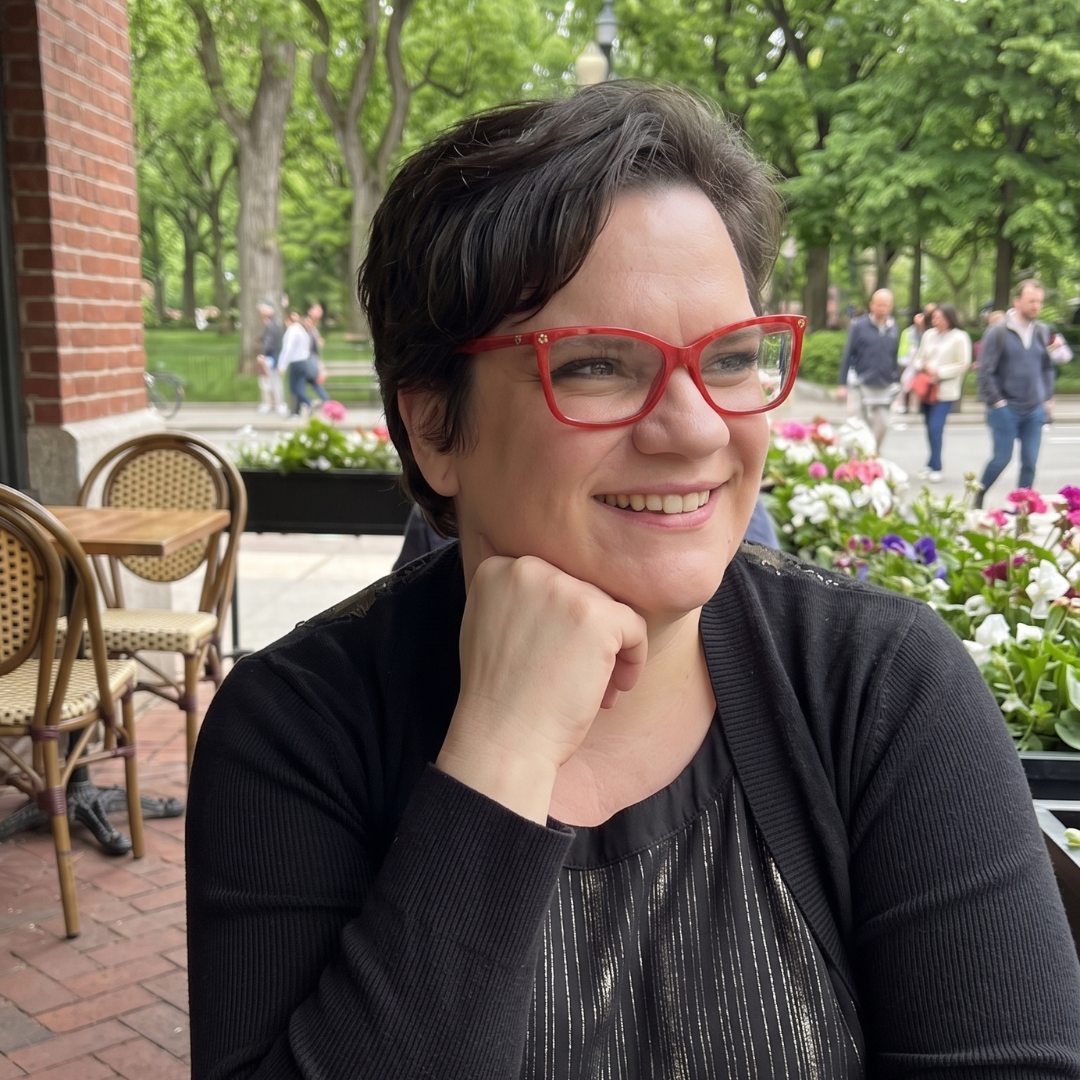
Rick Rood knows that feeling well. He has worked in education for more than forty years, guiding children and supervising front-line staff, and he is now a Certified High Performance Coach and the author of "Games Teachers Play Before the Bell Rings." Through his brands The Epic Teacher and Rebel Teacher, he brings the work of thought leaders like Jack Canfield, Tony Robbins, and Brendon Burchard to educators. Rick is also a member of the Clairvenu Inner Circle, and this episode of The Amanda Kaufman Show is a Here, Let Me Do That For You session, where Amanda coaches a member live. Over the course of the conversation she works through his money story, reframes how he prices, and hands him a simple daily outreach plan built around the people who are already looking for what he does.
HAFTA Is the Signal to Question the Rules You Are Following
The moment "I have to" shows up in a business decision, Amanda treats it as a flag. The follow-up question is always the same: do I really have to?
How It Matters: Rick named his biggest obstacle plainly. He grew up with mixed messages about money, and he now describes himself as an entrepreneur who is afraid of making it. That shows up as a lack of confidence in asking what his material is worth, and a belief that he has to discount what he does in order to get into schools and make a difference. Amanda recognized the pattern from her own start. Her first coaching sale was to her best friend for ten dollars an hour, followed by fifty-dollar sessions and a 350-dollar package, all while her prior corporate career had her flying around the country on multimillion-dollar contracts. The disconnect came from a belief that she needed a big brand behind her before she had permission to charge.
How to Do It: Listen for HAFTA. I have to be perfect, I have to be established, I have to have the brand, I have to discount. Each one gets the same challenge: do I really? Then scan the environment for where that belief is not true. Amanda met people charging far more who were, in her words, less prepared and less fastidious, and they were doing it repeatedly. Her one-word prescription for Rick was audacity. Have the audacity to set a price.
Common Mistake: Treating the HAFTA as a fact about the market. Many business owners assume the institutions they serve are stingy, even when they know intellectually that the opposite is true. Rick admitted schools are spending significant money on professional development. The block was in his head rather than in the budget.
Value Is in the Eye of the Beholder, So Price for Service Instead of Self-Worth
Amanda ran a quick experiment with Rick to make the point. She asked him to name something expensive that nobody could pay him to want. His answer was a half-million-dollar car. He drives an old Subaru and finds high-end cars ridiculous.
How It Matters: To the person who buys that car, it is worth half a million dollars. To Rick, it is worth less than zero. Value lives in the buyer, which means Rick is right that some teachers will never see the value in what he offers, in the same way he will never see the value in the car. The business question is a different one: are there enough teachers who are close to understanding it, who have something at stake, and for whom a professional relationship with Rick has real value?
How to Do It: Flip the pricing question. Instead of asking whether you have earned the right to charge a number, ask what price a specific person could manage that they would still notice. Amanda pointed to the Inner Circle as an example. If it cost two dollars a month, most people would buy it, open it once, get busy, and leave it on the credit card. The price is chosen so members notice the investment every month without questioning it every month, and therefore keep showing up. For an eight- or twelve-week coaching program, she prices at roughly ten times the monthly membership rate, because the participant needs to view it as a true investment and pair the money with real effort. Without the effort, there are no results.
Common Mistake: Confusing a low price with generosity. Paid challenges in online marketing illustrate the problem. Even with a small fee, the show-up rate is low, because the investment is small. The people who do show up and then buy the next level are the ones who felt the pain and priced themselves in. Amanda cited a summer challenge that charged 297 dollars to teach people how to talk to a camera, and called it genius: enough to get a return and feel good about it, and nowhere near the 2,900 that would have made it feel out of proportion.
Your Price Point Is Not Your Identity, and Business Is a Math Problem
Pricing, as Amanda told Rick, has nothing to do with you. He admitted that was hard to digest, because it runs backwards from how he was raised and from what the culture teaches: that how much money you make equals how valuable you are.
How It Matters: Amanda described a colleague who posts often about selling 30,000-dollar packages and recently shared that she had made yet another large investment in coaching to work on her confidence to raise that price to 40 or 50 thousand. The post said nothing about what her coach actually told her, and admitted she still struggles. Amanda's guess is that the price has become part of the colleague's identity, so moving it feels incongruent. Her advice: your price point is not your identity. Amanda did not become a worse coach when she offered a 47-dollar membership or a 200-dollar-a-month membership after stepping back from 36,000- and 40,000-dollar packages. She made that trade-off on purpose, to free her time and grow a community where conversations like this one happen.
How to Do It: Run the numbers before the feelings. A 30,000-dollar offer is meant for a person who wants to solve a problem of that magnitude and is willing to invest at that level. If the audience is teachers earning around 50,000 a year, disposable income is limited, and a 30,000-dollar offer might find a couple of buyers who compare it to what they spent on school. More likely, Rick can work with that person at 5,000 or 2,000. The trade-off is profitability. If the overhead or the cost of acquiring clients is too high, the business cannot sustain itself, and that is the math problem actually being solved.
Common Mistake: Turning a pricing decision into a statement about who you are. A lot of business owners build their sense of self around a number, whether high or low, and then defend it emotionally. Amanda's check is simple: a 50,000-dollar price demands a 500,000-dollar problem, a particular audience, and a particular way of moving through the world. Anything else is a story about social order rather than a business decision.
It Is Worlds Easier to Sell to Someone Who Is Already Shopping
Rick described his rebel teachers as disillusioned people whose impact is not being heard or implemented, and his solution as helping them see that they have agency even outside the institution. Amanda agreed with his read on the emotional experience, then named one of the biggest mistakes coaches make, one she made herself for years: trying to convince people to seek coaching at all.
How It Matters: Rick had quoted a book early in the conversation: people can only relate to the world as it occurs to them. Amanda connected that to the old line that when the student is ready, the teacher appears, and offered a twist. The teacher may have been there the whole time. The student simply could not experience it yet. No amount of drum-banging changes that.
How to Do It: Split the audience into the willing and the unwilling, and focus on the willing. That means the teachers already reading the books, attending the seminars, following the gurus, and working on themselves, who have not yet found training specific to their environment and goals. Amanda's picture is Main Street. Anyone building a business in a small town goes where the traffic already is, never to a random shack on the highway. Rick's response was that the idea seemed almost too simple, and that it made everything clear.
Common Mistake: Competing with the teacher who needs convincing instead of competing with the established players. Amanda suggested Rick think of himself as competing with the big coaching machines, the Tony Robbins programs and the growth platforms, for people who are already spending on growth. That is a very different business from persuading someone to open their wallet and their mind at the same time.
Beware of OPOs, Because Other People's Opinions Are Preferences, Not Facts
Rick was candid that the next hurdle would be taking rejection from people who are not even shopping without making it personal. His exaggerated version: what, you do not want my coaching, I am a failure, I will never coach in this town again. Amanda has a sign on her wall for exactly this.
How It Matters: Beware of OPOs, other people's opinions. An opinion does not make a fact. When someone says how dare you talk to me about coaching, what they are really saying is that it is their preference that nobody talk to them about it. Everyone is entitled to a preference, and it does not mean anyone has to change their mission or their method. If anything, that person did a favor by closing a file that was going nowhere, so time, energy, and emotion can go to the open files.
How to Do It: Assume it is not personal, because most of the time it is not. Most people like Rick just fine. They do not like the idea, the timing, or the conditions. The very few who lose their manners have something else going on that has little to do with him. Most people who do not want something do nothing at all. They leave the message on read and rarely even unsubscribe.
Common Mistake: Having too few conversations for any one no to be survivable. When there are only a handful of people in play, silence hurts. Amanda's remedy is to make meeting new people part of the daily practice, so no single response carries much weight.
Grow Your Network Through Your Network, With a Bare Minimum and a Deadline
Amanda's outreach method is deliberately simple, because the best strategies are the ones that fit on paper. The catch is that if it is easily done, it is easily not done.
How It Matters: The most receptive connections come through existing connections. On Facebook, the members area of a group shows how many friends you have in common with someone, and a request to a person with many mutual friends is usually welcomed. On LinkedIn, Amanda skips third-degree connections and focuses on people with a mutual contact. Then comes what she called the real money move: open the messages app, pick up the threads that look dead, and reopen conversations with real people. Invite them to chat, find out what is new, and then ask whether they know someone Rick should meet and would be willing to make the introduction. Champions love the people they already talk to, want them to succeed, and can be asked the same question every quarter without it feeling needy or gross.
How to Do It: Rick's honest obstacle is momentum. He is an introvert who was raised never to impose on anyone, and he can run a workshop for five hundred people but freezes at calling one of them. Amanda reframed introversion as a preference, then pointed out that every good goal has friction and parts of the process nobody prefers. The move is to make the goal bigger than the preference. Her coach Tom Bilyeu says goals make demands, and the demand here is activating the side of Rick that loves a deep conversation. When seventeen outreaches a day made him panic, they settled on a BAM, a bare minimum, of five hellos a day with a daily deadline, gamifying ten on good days, keeping the streak, and reflecting each week on how bad five really was. Five hellos takes about four minutes. Rick's accountability plan is to tell his wife, who does not let him off the hook, plus a printed tracker on the desk.
Common Mistake: Committing to forever. Five outreaches every day forever sounds horrible, as Rick put it. A sprint changes the relationship to the work. Seven days teaches something, thirty days teaches more, and ninety days produces enough data to know whether the method is worth continuing without changing course so fast that nothing can be learned.
Conclusion
The session with Rick came down to a handful of connected moves. Catch the HAFTA and ask whether it is really true. Price for service, based on what a specific person can manage and still notice, rather than on self-worth or a money story. Remember that a price point is not an identity and that business is a math problem about profitability and cost of acquisition. Stop trying to convince the unwilling and go where the traffic already is, competing for people who are already shopping for growth. Treat other people's opinions as preferences, close the dead files without drama, and put the energy into the open ones. Then build momentum with a bare minimum of five daily hellos, a deadline, an accountability buddy, and a ninety-day sprint. Rick left with a clear plan and a changed relationship to the work, and as an Inner Circle member he has the support for the conversations that follow. Whatever mission you are carrying, the people who are ready for it are closer than they look. Go say hello.
To hear the full conversation with Rick Rood, listen to Episode 363 of The Amanda Kaufman Show on YouTube, Apple Podcasts, or Spotify.
Frequently Asked Questions
How do I know what to charge for my coaching or consulting?
Start with the buyer instead of your self-worth. Ask what price a specific person could manage that they would still notice, so they show up and feel good about continuing. Amanda Kaufman prices the Inner Circle so members feel the investment each month without questioning it, and prices a short coaching program at roughly ten times a monthly membership rate so participants pair money with effort. Value is always in the eye of the beholder, so the job is finding enough people for whom the offer has real value.
Is it better to sell to people who are already looking, or to convince new people they need my help?
Sell to the people who are already shopping. It is worlds easier to sell to someone who is looking than to convince someone to open their wallet and their mind at the same time. That means focusing on the people already reading the books, attending the seminars, and investing in growth, and thinking of the big coaching programs as the competition rather than the skeptic who needs persuading. If you were building a business in a small town, you would go to Main Street, where the traffic already is.
How do I handle rejection when I reach out to potential clients?
Treat it as a preference, not a fact. Amanda's rule is beware of OPOs, other people's opinions, because an opinion about coaching usually just means the person prefers not to be approached about it. Most people who are not interested do nothing at all; they leave the message on read. When someone closes the door, they have closed a file so your time and energy can go to the open ones. Building a daily practice of new connections keeps any single no from carrying too much weight.
What is a simple daily outreach habit for an introvert?
Set a bare minimum with a deadline and keep the streak. In the episode, Rick Rood and Amanda settled on five hellos a day, which takes about four minutes, with ten as a gamified stretch on good days. Reach out to people with mutual connections, reopen old message threads, and ask existing champions for one introduction each quarter. Add an accountability buddy and a printed tracker, and run it as a ninety-day sprint rather than forever, so there is enough data to decide whether to continue or adjust.
Where can I get Rick Rood's free Two-Page Mission Generator?
Rick's free gift is The TWO-PAGE Mission Generator, a short tool for creating your compelling life's mission as an educator and human. It is available inside his Facebook group, Teachers Transformed, at https://www.facebook.com/groups/teacherstransformed.
Transcript
Amanda Kaufman (00:00)
Well, hey, hey, welcome back to the Amanda Kaufman Show. We have another special segment here called Here, Let Me Do This For You. So today I am joined by Rick Rude, who has worked in the field of education for over 40 years. He has been guiding children and supervising frontline staff with degrees in education and after school care. Rick is also a student of the Thought Leader.
Movement. Rick is the author of Games Teachers Play Before the Bell Rings and is a certified high performance coach working privately and in groups with educators, helping them to achieve higher levels of performance in their work and their personal lives. And I have personally had the pleasure of knowing Mr. Rood for a few years now because I'm also a certified high performance coach. So this is a very special episode of Here Let Me Do This For You.
because I I gotta tell you, Rick, I've just been itching to do some do some stuff for ya. So welcome to the show.
Rick (01:04)
Awesome, awesome. Thank
you. Thanks. It's great to be here.
Amanda Kaufman (01:08)
I'm so glad you're here. So give us a little bit of background on your movement. Like what are you building so that everybody has a context of what we're helping to make happen today?
Rick (01:19)
Well, I I think, you know, like a lot of, you know, shadow work that I've done indicates that this starts back when I'm in school and I had a terrible experience in school. just, you know, from about fourth grade on didn't want to be there. and I was just beset by teachers that really I don't wanna say they couldn't care less, but
It's some of those teachers that you find in classrooms, unfortunately even today, where you look at and go, Man, I th I think you've picked the wrong profession you know, because what you're doing is is not good for the kids. And so it all shifted for me when I went to a Tony Robbins seminar and I wish I could remember what year it was, like ninety three or ninety four, back before he was big. Like in a and and it was big to me because we met in the hotel ballroom and there are probably four hundred
people there. and it was the whole firewalk experience and all that of people are familiar with Tony Robbins and and and his workshops. And I remember at one point like looking across the room and at all the other participants and I was the only teacher there.
Everybody else is doing multi-level marketing or insurance or, you know, AMWA or whatever, and they were you know, they're all salespeople. And I'm like listening to what Tony's putting out, and I'm like, if every teacher had access to this knowledge and this technology, we would completely transform the entire educational system in this country. And and for the better. And so from that point on I I really made it my mission to take the work of these thoughts.
thought leaders and bring it to teachers. and and as the years rolled by, obviously I started putting my own spin on it. I became a certified high performance coach, you know, like I said, where we met, and you know, and and just have been able to impact a lot of people through this. And you know, it's it's my overarching goal. Like w we need to change what's wrong with education in this country. and and I am on
Amanda Kaufman (03:14)
Amazing.
Rick (03:15)
board for doing that.
Amanda Kaufman (03:17)
So I'm really curio we we will do something for you, but I'm just so curious. You were the weirdo in the room. I mean, you were that teacher that that got into the ri what inspired you to do that? That first room.
Rick (03:31)
You know,
going to that Tony Ro are you're talking about going to the Tony Robbins experience? Yeah. It was it was
Amanda Kaufman (03:38)
Yeah, like how'd you know to go do that? Because you're right, you know, entrepreneurs
do it all the time, but you're also right, a lot of traditional
Rick (03:45)
Yeah, no, it was perfect timing.
Amanda Kaufman (03:48)
employment people don't.
Rick (03:50)
Yeah.
it was all timing. It was that era and and I'm probably give away my age here where I was out of college and working and that was the era when Fran Tarkinton would come on late night T V and hawk Tony's, you know, thirty day to success tape program and and I think I mentioned it to my mom once and my mom bought it for me for Christmas. because at that point I'm just a poor struggling teacher in a studio apartment in the Bay Area, which was already too expensive to live in. I right now it's even worse. But
you know, so I listened to these thirty thirty day tapes and my entire life shifted, you know, just shout out to Tony, you know, but they were concepts and ideas that I had been searching for but had never found before. And all of a sudden it just all became very, very clear. And when I heard he was coming to town, I had some fo somehow found the the nerve to ring up the sales office and said, Hey, do you have a special
Discount for teachers. And they said, Yes, we do. That is awesome. And so I got to get into this workshop for about half price, which was still a big financial stretch for me at that point. And yeah, so it was just timing and just, you know, from all the power that I got from the that 30-day cassette tape program that shows you how old it is, too. It was all on cassette tapes. you know, walking into that room and hearing it live and seeing it live and experiencing it.
experiencing that firewalk. It just like it was the tapes times fifty. It was like just blowing my mind. And and again,
Amanda Kaufman (05:20)
Mm.
Rick (05:21)
so like two big steps forward in self development.
Amanda Kaufman (05:25)
That's so amazing. So catch us up a little bit on what are you building now? You know, you're bringing thought leadership to teachers. How how can I help today?
Rick (05:37)
So so I have a couple of brands that I'm put out there. the first one's called the Epic Teacher, where we focus on a framework with the with the letters Epic where we talk about E is for ex expertise. And so we this and and for those of the those of the listening audience that aren't teachers,
Expertise is everything they teach you in college and the college prep to become a teacher. So we don't spend a whole lot of time there. We make some distinctions and and explore like how we increase our expertise, but really that that ground is well covered by the colleges and universities today. What isn't covered is the remaining three letters. P is for passion. nobody talks about that.
And and it's interesting being involved in a lot of online teachers' groups, there seems to be this dichotomy. About seventy percent of the people feel like it's a calling. Like it's, you know, they're passionate about it because this is something that's, you know, it's not just a job. It's not, you know, working at seven eleven. It is something that they are just passionately committed to for a multitude of different reasons. and then the other thirty percent, you know, say, this isn't this isn't a calling, stop calling it that and you
know, they're just the sour pusses, you know, yeah, it is just a job. So I found that interesting. So I I wanted to put that in there because I think the best teachers I've had in my life
the ones that really changed the trajectory of my life were all very passionate about what they did. They didn't do it for the paycheck. They didn't do it for the summers off. They did it because they could literally see that they were transforming students' lives. And when I
Amanda Kaufman (07:12)
You're making me think of all my favorite teachers
and yep, same. Like they had a different level of care and like what they cared about.
Rick (07:23)
Most definitely. And and it's 'cause they're driven by different things. Like I said, it's not the summer's off. It's it's like I am here to make a difference. And when I started teaching as well, that was always the thrust for me. It was like, you know, I am here to make a difference. And fortunately early on I realized that you're not just making a difference in this kid's life today, but you're also affecting their family and what they're capable of in the future. And then the the big
biggest honor I think as a teacher when I was working in the school system is to have one of my former students come back and become a teacher themselves. And I can count five of that have that through my career have come back and they've become teachers. So that's that's that's the huge part. you know, I know I was doing something right.
Amanda Kaufman (08:09)
I love that. Okay, so passion I see.
Rick (08:13)
and so the I and the I is where we get into the a lot of these positive psychology principles. I stands for identity. And and and I wish I could remember the author of the book and even the name of the book. But I remember reading this really influential book that that was written by one of the leaders of the landmark education program, and the part that stuck with me is that things only occur to people
as it occurs to them. I know it sounds a little weird and redundant, but you know, it talks about, you know, your identity, how you're showing up, what you're doing on a daily basis, really is the crux of and and and I like to just silo it to teaching, but it really is life, right? How you show up in life determines the outcomes that you're gonna get.
And if you're showing
Amanda Kaufman (09:01)
Okay.
Rick (09:02)
up teaching for the paycheck, then the kids know that, you know, and and you're not gonna have the impact that you could. But if you're showing up with the attitude of I'm not just here to teach, you know, civics, I'm here to teach kids the possibilities of their lives. And just the vehicle I'm using happens to be this curriculum about civics.
Amanda Kaufman (09:23)
say the same about business absolutely right it how
Rick (09:27)
Yeah.
Amanda Kaufman (09:27)
you think about how you think about for example impact so a lot of people i work with like you are extremely impact driven and so business is the vehicle the identity you have though really plays a huge role because are are you the kind of person who's waking up every morning saying time to have more impact today time to like push this along today
Time to show up today. And you know, business
Rick (09:54)
Yeah.
Amanda Kaufman (09:55)
demands that. And the people that struggle, I find, with business often struggle with embodying the identity of being someone who is using the vehicle of business to effect some kind of an impact or a change. So yeah, totally agree. What's the C?
Rick (10:11)
One hundred percent.
Yeah. and the C stands for commitment, confidence and connection. one of the one
Amanda Kaufman (10:17)
I love that.
Rick (10:17)
of the big things I know the big discussion right now in the world of teaching is everyone's afraid that AI is gonna replace them as teachers. And if you look at the the studies, the research, in order to have true learning, there has to be a relationship. One that AI can't provide.
And so it's my honest belief that teachers aren't gonna be replaced by AI. You may lose some. The teachers that know how to use AI are gonna be the ones that are there. But it's not gonna replace that because that relationship piece is so important. I mean, like like you know, you were just doing, think back on the greatest teachers that you had, right? They there is that connection. There is that relationship.
that you know, that learning springs from. 'Cause you have to you have to trust someone to learn from them.
Amanda Kaufman (11:07)
I agree with that completely. And find the same thing with coaching and consulting actually. I've
Rick (11:12)
Yeah.
Amanda Kaufman (11:13)
done a lot of reflection about AI and we might just use a little bit of it today. but doing a reflection on AI, I was I I've arrived at this conclusion that the one thing AI will probably never be able to do is care.
Rick (11:28)
Exactly.
Amanda Kaufman (11:28)
It can't
care, right? You can tell it what to focus on, you can give feedback on it, you can have new outputs and iterations, but the caring about the quality of the output or the quality of what you're using it for, that's human.
Right? Because as human beings, we we experience everything through meaning, like like you were saying earlier around the identity, like what does it mean? And AI doesn't doesn't do that, right? AI is math. It uses probable probable, you know, you probably mean this when you're talking, and you probably want this from the vast wealth of my information, and it's all about probability.
which is powerful
Rick (12:16)
Right.
Amanda Kaufman (12:17)
as a tool, but it's not the same thing as caring.
Rick (12:20)
And yeah, and you're absolutely right. It is an incredibly powerful tool. I think I'm I'm excited to be living in the days that we're living in now because like some of the stuff it can do is just insane. But the one thing it won't be able to do is see that kid walk in that hasn't eaten since last Friday because his parents couldn't afford it and and understand what's going on. Or the kid that just got bullied in the hallway and and comes in and shuts down. AI is not gonna see that.
And that's where that relationship piece comes in. 'Cause I mean it's sad to
Amanda Kaufman (12:50)
Yeah.
Rick (12:51)
say but for a lot of kids, school is their safe place where they know that, you know, if they have a good teacher, if they have good friends around them that they're taken care of for there. So
Amanda Kaufman (13:02)
Absolutely, absolutely. Okay, so Rick
Rick (13:06)
Mm-hmm.
Amanda Kaufman (13:07)
You have a huge amount of impact. You know, this was one of your two movements, right? So there's the epic movement. What's the other one?
Rick (13:18)
The other one I'm I'm calling Rebel Teacher. And you can see like the background
Amanda Kaufman (13:21)
Who
Rick (13:22)
I I I bought this specifically. It's it's this is actually a cloth background. A lot of people think it's just a zoom trick. But it's but Rebel Teacher
is me reaching out to those teachers who understand that the education system is broken. And I've been saying this probably for twenty, twenty-five years, is there's a revolution coming in education. And the problem is is that we are so locked into institutionally the I I call it the Model T model of of education where
get these kids to where they can perform on an assembly line and take orders and be productive people in the economy and everything will be all right. And and it doesn't allow for their self expression. It doesn't allow for human growth. and so
What's coming is that a bunch of teachers are realizing that this this system sucks and you know it it had its time, it had its place, but it's time to move on. But the thing is it's become so entrenched that incrementalism really isn't wearing away the foundation and and pretty soon I think there's gonna be a revolution in how we do education and it's gonna shake things up. And so I'm trying to reach these teachers, especially the ones nowadays
who are quitting. We're seeing teachers leave the profession in droves. and and they're good teachers.
You know, their heart's in the right place, they have the passion, but the system is just so overwhelming and oppressive sometimes. you know, and I've been very fortunate to to work in some fantastic districts and I realize that that's a privilege that I've had. I you know, like I have a friend of mine from college who's who's a teacher here at Albuquerque and the system she works under is just oppressive. And so she is, you know, one of these rebel teachers.
Amanda Kaufman (15:11)
Rebel
Rick (15:11)
color that know
Amanda Kaufman (15:12)
teacher thing.
Rick (15:13)
that change is coming, that know that change is needed, and so she's she's under there. Those are the teachers I'm trying to reach, saying, you know, it's not time to quit. It's time to double down on what you know is right and and give them the tools and strength that they need to do that.
Amanda Kaufman (15:29)
I was so curious about that and I just did a quick search and I asked perplexity, an AI tool, how long does a teacher work before they quit?
And in the US, most teachers do not quit immediately. A reasonable rule of thumb is about one in four teachers may leave teaching within five years. Other studies estimate that it's closer to
Rick (15:54)
Mm-hmm.
Amanda Kaufman (15:54)
three in ten. And in a recent measurement, 7.1% of teachers left the profession in a single year, while 8% moved to another school. I think that's like wild when you consider how many.
years it takes to even qualify to become a teacher, the amount of investment that you make
Rick (16:17)
Right.
Amanda Kaufman (16:18)
personally, the student loans, like just everything that you go through to be able to have the honor, to have one in one in four or one in five gone in basically the same amount of time. That attrition is insane.
Rick (16:31)
Yeah. I mean and I think it comes in like we talked about, you know, it's it's a profession where most of the people coming in have an identity of wanting to change the world. And when they get there and they find that there's so much resistance from rules, from institutions, from the top, from admin, they just get disillusioned and say, Man, this is this is not what I signed up for.
Amanda Kaufman (16:54)
my gosh. All right. So I defin I desperately want to help you help them. So what are we working on today?
Rick (17:01)
All right.
so in terms of what? Sorry, give me more context on that one.
Amanda Kaufman (17:06)
Yeah, yeah. So
so for sure. So you've got these two brands. What would you say is the biggest obstacle or bottleneck to having the kind of impact you've been hoping for?
Rick (17:17)
Well, I think part partly is something that you already sort of talked about, like the identity that I talked about, the identity of showing up as using that business vehicle. so in in my younger days in my rearing, I got a lot of really mixed messages about money.
And so I'm one of these entrepreneurs that's afraid of making money because because of all the baggage that I'm carrying. so that's probably the biggest obstacle is is viewing myself as someone who can successfully use that vehicle of business to get the word out.
Amanda Kaufman (17:53)
Amazing, gosh, let's unpack some of it. so sounds like we're gonna have a little mindset session here and that's cool. And if we end up doing something in the technology, we will. but first we gotta work on this identity piece. Would you agree with that?
Rick (18:08)
I would definitely agree with that.
Amanda Kaufman (18:10)
Okay. Rick, I mean, if you were that dude, you know, somebody who who d did have a confidence that, you know, he could wield the business vehicle, that he could attract the revenue, that that he would be responsible with the money and he would direct it to wherever he chose. Like if you did have that kind of identity working for you, what would change? What makes that so important?
Rick (18:36)
Well, I think it's important because a lot of times I lack the confidence in asking what my material is worth.
Amanda Kaufman (18:46)
Mm.
Rick (18:46)
because implemented these ideas I have, you know, are
like invaluable to teachers because it doesn't just change their situation in terms of, you know, where they're gonna work or what they're gonna work. It changes their identity of themselves as as movement makers, as as people that are making a mark on the future of the world.
You know, and and like I said, a lot of get into there because of calling, but they don't realize how far that extends. They don't realize that when they get to my point, forty years in, that they're gonna have students that come back and thank them, students that come back and become teachers. you know? And and it's just it's it's fun to watch the impact once you get this perspective. But they don't have that perspective coming in. They just know they wanna make a difference. And so
Amanda Kaufman (19:33)
So there's
Rick (19:34)
I think part of it, you know, like I said, a lot
Amanda Kaufman (19:34)
it sounds like there's actually two things.
Rick (19:36)
of
Amanda Kaufman (19:37)
It sounds like there's two things at play though, right? One is your recognition of your ability to do this. But the second thing I really got from that was the recognition that that they, the nebulous they will recognize it. Recognize the value.
Rick (19:56)
Right. And and you know, and I think they need to be trained to recognize the value. the other thing though too is
like we talked about the institution of schools, you know, I have a lot of blocks from my work, you know, with with schools and youth facing organizations, that the administration is stingy with money. And, you know, and so, you know, don't good luck trying to find a a job in and in as far as professional development goes. Which I know and here's the problem is intellectually I know that that's not true. S schools are spending crazy amounts of money on professional development.
You know, especially compared to, you know, fifty, seventy years ago. Right. And so so they understand the importance of it, but in my head it's still, you know, on lockdown. Like and and I feel like I need to discount what I do monetarily so that I can get in there and make make the difference.
Amanda Kaufman (20:48)
Yeah, well let's unpack this a little bit because you know I think this will be helpful for anybody listening that has impact in mind and they're looking at business as being the vehicle for that impact. you know, when I started my business, I was a life coach, an energy coach, somebody who just saw the power of the power of a of a
conversation that advocates for your ability and your genius, you know. And that conversation is I knew it was transformative. I got very, very good at it. And then when I went to go and sell it, I was like, you know, and my first sale was to my best friend for like ten bucks an hour.
Then I went and hustled on the mean streets of Dallas and some networking groups, and I picked up a client or two and it was like, 50 bucks, you know, I heard I have to have a package, 350 bucks, you know. And I had like this small little mouse voice kind of ca came over me when it came to that. And what's hilarious about that is that in my prior career, I was
you know, on these multimillion dollar contracts. You know, they were flying me all over the country to go do this work. And so there was this wild disconnect that happened when it became Amanda selling. Right. And I just started feeling
Rick (22:05)
Yeah.
Amanda Kaufman (22:06)
like this tall. because I believed, and this is not accurate, but I believed that I needed the big brand behind me and I needed to have that permission, I guess.
to do what I was doing. And so some of some of what I'm gonna suggest here, Rick, is less coachy, just more mentory. because I know you've done a ton of coaching, yeah.
Rick (22:32)
Yeah.
Amanda Kaufman (22:33)
Yeah, okay. So coaching is amazing for like revealing what you think. Mentorship is amazing for like learning new ways to think.
So that's the distinction.
Rick (22:43)
Awesome. All right.
Amanda Kaufman (22:44)
Yeah. And you know, sometimes I'll be coaching you, sometimes I'll be mentoring you. and this is more of a mentorly moment. So another way to think, another way to think about business is instead of thinking about it like I have to f I have to be perfect, or I have to be so good at this, or I have to be so established, or I have to have
Ha like HAFTA is the big signal. The second you start saying HAFTA, you let's follow that up with another question, which is do I really have to? And so for me, it was I have to have this big brand behind me in order to charge XYZ number of dollars. And it wasn't until I really questioned, but do I really have to? And start looking and scanning your environment for where is that not true?
And I met other people who were charging hecklots more. And frankly, I thought they were dumber. I thought they were like less prepared. This may be a nicer way of putting it. They were less prepared. They were less fastidious, I suppose. and yet they were just charging gobs of money more and doing it repeatedly. And I was like, well, that's just rude.
but I have to I had to really examine that as like, okay, what is the new way of thinking? One word for you, friend. Audacity. Just straight up audacity. Have the audacity to set a price. Because the truth about value is that value is always in the eye of the beholder anyway. So let's just do a quick are are you
Rick (24:23)
Mm-hmm.
Amanda Kaufman (24:23)
game to do a little quick experiment with me?
Rick (24:26)
Sure, let's do it.
Amanda Kaufman (24:28)
Okay, I want you to think about something that's really expensive that you would never buy. Like something like maybe a physical thing or an experience or something like that where like literally they would probably have to pay you gobs of money to do that expensive thing or to buy that expensive thing. Like there's just no way on earth that you would ever want to buy it. Have you gotten it?
Rick (24:52)
Yeah.
Amanda Kaufman (24:53)
Okay. That I mean if you want to share, what
Rick (24:55)
you you want to hear it too. All right.
Amanda Kaufman (24:59)
what is something someone could never pay you to want to
Rick (25:01)
No, that's
Amanda Kaufman (25:01)
to buy?
Rick (25:02)
So I don't know if I'm cashing in my man card here, but I have never been fascinated with cars. I drive I drive an old beat
Amanda Kaufman (25:09)
Okay.
Rick (25:10)
up Subaru and it but so like this high end a car that costs like half a million dollars, to me is the most ridiculous thing ever.
Amanda Kaufman (25:19)
Okay, so to that fellow that pays half a million dollars to have that car, it's worth half a million dollars. To this fellow that I'm talking to right now, it is worth less than zero dollars.
You see? So value is
Rick (25:36)
Makes sense, yeah?
Amanda Kaufman (25:37)
in the eye of the beholder. So I think you're actually on track that some teachers are really not going to understand the value of what you do. You're spot on. Just the same way you wouldn't pay half a million dollars to get that car.
So the business question becomes: are there enough teachers who are close to understanding that? Who are close to understanding that the solution is the solution you provide, the community that you're offering, the curriculum that you're offering, the coaching and the mentorship. Do they have things at stake in their life that
Being in a relationship with you professionally has significant value. And so one way that I think about value is instead of thinking like, have I earned the right to charge XYZ? Instead, I like flip it around. I flip it around and I ask, like, if I want to work with somebody like Rick.
What is the price that I could charge that he could manage? That if he didn't spend that towards his goal, he would not consider it an investment. He would not be making like it's from his perspective though, right? So just for an example, if I I know you're in my inner circle, the Clairvenue inner circle. It does not cost this, but if it was only $2 a month, would you even be here?
Rick (27:15)
I feel like this is a trick question. Amanda, I love you. Yes, of course I'd be here. No, I I I think I see what you're saying.
Amanda Kaufman (27:21)
But the truth, but you probably have those those subscriptions,
right? We've all done it. We've all bought that little onesie twosie thingy and we're like, wow, what
Rick (27:27)
Right.
Amanda Kaufman (27:27)
a screaming deal. And then we kind of open it once and then we're we get busy or or whatever. And because it's
Rick (27:32)
Put it away, yeah.
Amanda Kaufman (27:33)
like two bucks, we just leave it on the credit card and you know, like it is whatever. So when I when I look at the price that we charge for our various levels of programming, it's less so about my self-worth.
And what I believe I'm worth, or my money story. And it's actually more about service to you. What's the amount that if I charge that, you notice the investment and you will show up and feel good about continuing? That's how I chose the price point for my program. It was actually knowing my avatar pretty dang well and knowing what capacity they indeed had.
That they didn't have to question it every month, but at the same time they noticed it every month. So then, therefore, they would be showing up. That's for a recurring thing. For a coaching program where I need you to show up like consistently for say eight weeks or 12 weeks, the price point is actually like 10x the monthly rate of a membership. How come? Because it needs to be enough for you, the participant.
to view it as a true investment and therefore you're going to pair your monetary investment with your effort investment. And the reason that's important is because if you don't show up with the effort, what happens?
Rick (28:57)
You just don't you don't have any results.
Amanda Kaufman (29:00)
Precisely. So, you know, this is the reason that, for example, in online marketing, paid challenges are pretty popular. You know, it's like you sign up, maybe it's like free to sign up, and then the VIP gives you access to the recordings, or maybe it's like low ticket to sign up. and yet it's not a hundred percent show-up rate, it's a really low show-up rate compared to the number of people who sign up, even if there's a fee.
The reason is because it's really not that much of an investment. And so then the people who do show up that then get sold the next level at the end of that challenge, they're the ones that are going, like, hey, like this pain is real, baby. So I'm gonna show up and I'm gonna, I'm gonna deal with the inconvenience for a few days. But then right at the end, you know, that offer, it's priced at a place where that avatar.
views it as an investment. And that's the reason that for example, like there was a Yap challenge this summer. She charged $297 for it. I'm like friggin' genius. Because it was teaching you how to speak into your camera to make content production a lot easier. That's not really a terribly sophisticated thing. It's not terribly complicated. You're gonna get a return on that investment and feel good about it.
at that level versus if she'd charge say two thousand nine hundred for it.
Rick (30:30)
Sorry about that, we just got an alert. So
Amanda Kaufman (30:33)
goodness. but yeah, so so pricing, all of that to say, Rick. Pricing has nothing to do with you.
Rick (30:40)
Interesting. That's
I will say it's hard to digest, but I it's backwards from how I was brought up. You know, it's backwards from the experience
Amanda Kaufman (30:47)
Yeah, absolutely.
Rick (30:49)
in this culture.
Amanda Kaufman (30:51)
Yeah. Well our culture teaches us that how much money we make equals how valuable we are.
Rick (30:59)
Right.
Amanda Kaufman (31:01)
You know, I have a I have a colleague kinda makes me laugh now and again, but she posts on on Facebook all the time about how she sells these thirty thousand dollar packages. I do the same thing, but I don't really post about it. I'm only mentioning it here to illustrate the point. And I saw a post from her
saying that she'd spent hundreds of thousands of dollars with coaches and mentors and she just you know dropped another big investment to ask about her confidence to raise her price from thirty to forty and fifty thousand dollars. And what was so interesting about the post is the post said nothing about what her coach actually said to her.
And the point she made in the post was, well, I still struggle with this. And just from reading the post, my guess, and this is purely speculation on my part, is the reason she's not raising her price is because she identifies.
With the price. She's made it part of her identity that she's someone who serves
Rick (31:58)
Mm.
Amanda Kaufman (31:58)
people at that level who can afford the 30,000, you know, and so there's an incongruency for her about what has to be true to go to that next level. And so to challenge that identity.
Like the thing that I I would tell her, and maybe she'll see this, I don't know. is your price point isn't your identity. I didn't become a worse coach for offering a $47 membership or $200 a month membership when you know I
Personally stepped down from doing $36,000 and $40,000 coaching packages mainly because I wanted to free my time capacity and I wanted to work with people who were willing to pay that, you know, $100, $200 range per month because that's my joy. And that's really where I love to play. And so the price, the trade-off is I'm not making as much per sale.
however, I get to grow a community and I'm really excited about the community we're growing. people like you are in it, for example, and we get to have these kinds of conversations at this level
Rick (33:11)
Awesome people in it.
Amanda Kaufman (33:13)
because of that. But like if I made my identity all about, I'm a hoity-toity coach that charges XYZ amount, that's all about me. And that has nothing to do with the service.
So that's not to say don't charge $30,000.
Rick (33:27)
Makes sense.
Amanda Kaufman (33:28)
It's just check yourself. Like a $30,000 offer is meant for a person who wants to spend that much investment to solve a problem of that magnitude. So it's a particular audience, it's a particular problem, you have to walk move through the world in a particular way.
To support that. And if you want your price to be $50,000, okay, babe. What's the problem that you're gonna solve that's worth $500,000? And who are you willing to become? And who are you becoming that for? What like what is what is your story about how you're placing yourself in the social order of things when it comes to your pricing?
And I think the better you can be at just realizing business is a math problem. It's not emotional. It's not identity. It's okay, teachers. I know an average teacher makes what $50,000 a year. Let's just say on average, you know, and so okay, their disposable
Rick (34:30)
Right.
Amanda Kaufman (34:30)
income is gonna be considerably less. So if you, Mr. Rick Rube, bust out with a $30,000 offer for this audience, you might find a couple.
That it's like, well, when I compare what I spent to go to school and I compare that to my entire future career, yeah, maybe I'll I'll I'll scrounge up another $30,000. More likely you'll be able to work with that person for five, right? Or two. but there's a trade-off, and this is where business is math. The trade-off is if you and your business are not profitable.
If the overhead or the cost of acquisition of those clients is too high, then you can't sustain. And that's the math problem we're actually solving for. It's not an emotional problem.
These rebel teachers, what is keeping them up
Rick (35:24)
Mm-hmm.
Amanda Kaufman (35:24)
at night? What's their what's the biggest problem they're facing right now?
Rick (35:29)
The biggest problem they're facing is that they are disillusioned at the effect that they the the the impact that they wanted to make as a teacher and it's not being heard, it's not being listened to and it's not being implemented.
Amanda Kaufman (35:46)
What is your solution to that?
Rick (35:48)
So the solution is is to create a an understanding in them that I mean and and it's funny because I can draw so many parallels to what you just told me, into their own worth and into what is having that impact worth to them.
Is it worth quitting that job and finding another district where they're more supported? Is it just having a better self image or self-esteem attitude, a a a go for it attitude, rather than I'm just gonna cave to to institutional demands all the time? you know, and and really I'm I'm a huge believer that all change in the world comes from within.
and getting them to understand that they're not just a victim of circumstances, that they have agency and power, even though they they're not part of the institution.
Amanda Kaufman (36:38)
Mm-hmm.
Rick (36:39)
Did I g does that make sense? I feel like it's a bit of a tough one to explain, which might yeah.
Amanda Kaufman (36:42)
Yeah, I I really I I do think it makes sense. I think you've
got a really good dial-in on the emotional experience. Now, in terms of the solution of coaching, one of the biggest mistakes that coaches make in general, did it, did it so many times. This is one of those this is one of those things I tried, like I really tried to convince people to seek coaching.
baby did I try, right? And and as a fellow world changer and impact driver, I mean yeah, like I I banged on that drum.
for a long time to try to convince people like hey the power comes from within hey you know partnering with a coach can make all the difference in the land blah blah blah you know what's kind of funny is you you brought it up at the beginning of this call which is that it was from that book what was that again about people experiencing the world through their lens what was that
Rick (37:47)
Yeah.
People yeah, people can only relate to the world as it occurs to them, basically.
Amanda Kaufman (37:52)
There it is. Yeah. So a phrase that occurred to me as soon as you said that the first time was, as soon as the student is ready, the teacher appears.
Rick (38:03)
Yeah, and that's I something I found to be true throughout my whole life.
Amanda Kaufman (38:07)
Absolutely. You know, what if the teacher was there the whole damn time? And they just couldn't experience that the teacher was there.
Rick (38:15)
Right.
I yeah, I definitely I
Amanda Kaufman (38:16)
So
Rick (38:17)
definitely see that, so
Amanda Kaufman (38:20)
I would take your avatar situation and perhaps go for a little bit of a bifurcation. Okay. So the bifurcation
Rick (38:27)
Okay.
Amanda Kaufman (38:27)
is this. The willing and the unwilling.
Rick (38:31)
Okay.
Amanda Kaufman (38:33)
It is it is worlds easier to sell something to someone who's shopping than it is to convince someone to open their wallet and open their mind. It's just worlds different. So would you say in your experience that there's
There are these two camps of teachers where there's the proactive learning teacher who perhaps is into personal growth and development, is working on themselves, but there's gaps in that because the people they're learning from perhaps are not are not
familiar with the environment that they find themselves in or perhaps the goals that that person has, they're looking for more specific training and mentorship. Is that fair?
Rick (39:26)
Yeah.
Amanda Kaufman (39:27)
So there's this crazy thing that happens in social groups because when I mention to people like, hey, let's focus on people who are already shopping for what you've got.
Let's focus on people who who maybe are already reading the books, already going to the seminars. Maybe they've they've been following gurus, but they haven't gotten down to the brass tacks just yet. Or maybe they've been in consumer mode, but they haven't been in that like coachy activation place. Right? That's that next move. What if you're competing with the big mega coaching machine?
Right. So like the Tony Robbins coaching or the growth.com. What if you're actually in competition with them versus in competition with the teacher who needs to be convinced that they need this?
Rick (40:14)
Well I like that and it god, it just it seems so simple. The the idea easier to sell someone who's shopping than to convince someone to get in the car and go to the store. Right. I was like, duh, okay. So I guess
Amanda Kaufman (40:24)
Exactly. Yeah, exactly. Well, if you were building a
business in a small town, you'd go to Main Street, right? You wouldn't just like build in some
Rick (40:32)
Right.
Amanda Kaufman (40:33)
random shack on the highway. You would be like, where's all the traffic? Where are people already looking? Right?
Rick (40:40)
True. So I guess that's then the next step for me is trying to figure out how to get to those people. And and the other thing is and I'll be honest, I'm going to have to learn to take the rejection from the people who aren't even shopping without making it personal. 'Cause I think I do that a lot too.
What, you don't want my coaching? my
Amanda Kaufman (40:59)
Yeah, me too.
Rick (41:00)
God, this is terr I'm terri I'm lost, I'm a failure. never coach in this town again, you know. It it goes like that. I'm exaggerating, obviously, but
Amanda Kaufman (41:09)
You know, I literally put it on my wall. I said, beware of OPOs, right? So beware of other people's opinions, right?
Rick (41:17)
Opinions, yeah.
Amanda Kaufman (41:18)
Their opinion does not make a fact. It usually when an opinion like that is being expressed, what they're saying in not so many words is that's not my preference.
That's all they're saying. So if they're saying like, you know, how dare you talk to me about coaching, what they're really saying is it's my preference, nobody talks to me about this. And it's like,
Rick (41:41)
Got
Amanda Kaufman (41:41)
we're all entitled to our preferences.
Doesn't mean you gotta change yours. Doesn't mean you gotta change what you're doing or what your mission is. And if anything, they're doing you a favor. So you're not putting so much energy into a relationship that's going nowhere. They're actually like, cool. You know? conversation closed. We can close the file on that one and it's okay.
Rick (41:58)
Well
Amanda Kaufman (41:59)
We're gonna put our resources, our time, our energy, and our emotion towards the open files.
Rick (42:04)
So no, so that is is revelatory and it makes more sense, you know, what you've taught about the whole you know, meet connect kind of thing and and getting out there it's a numbers game. So I I get that. And so I think that's part of my personal development is I'm have to work on that emotional reaction when someone doesn't like me. You know, and so and just realize it's gonna happen.
Amanda Kaufman (42:26)
And you know what they you
know most of the time, Rick, they like you just fine. They just don't like the idea, you know, or they don't like the
Rick (42:32)
Right.
Amanda Kaufman (42:32)
timing, or they don't like the conditions, you know? Like
Rick (42:36)
Mm.
Amanda Kaufman (42:36)
it's it it really is truly not personal most of the time. And the very few times that it gets personal, man, that person has something else going on. You know, if they lose their manners, if they forget, if they forget that how to be nice, like that
That is that's a more global issue and it really doesn't have as much to do with you as you might think.
Rick (42:57)
Okay.
Amanda Kaufman (42:58)
Yeah, yeah. Cause most people are polite and in you know the most people that don't want something, you know what they do?
Rick (43:06)
What's up?
Amanda Kaufman (43:07)
Nothing at all. They just leave
Rick (43:09)
Just ignore.
Amanda Kaufman (43:10)
you on read. They they they don't even unsubscribe most of the time. Like they'll just not proactively engage.
You know, and at first that can hurt if if
Rick (43:18)
Yeah.
Amanda Kaufman (43:19)
you only have like a few people. And this is why I keep encouraging so many business owners like men, meeting new people is part of your daily practice. Making new connections with people every single day is important. And the best way to make great connections that are receptive to you is to make connections through connections. So for example,
Maybe you have a practice of every day sending out five Facebook friend requests. Don't find random strangers on the internet to send a friend request to.
Rick (43:53)
Ha ha.
Amanda Kaufman (43:55)
Maybe go to a you know what's cool is if you go to a group on Facebook, you go to the members area, it'll tell you you have six friends in common. You have a hundred friends in common, you have all these friends in common. So if you send that friend request.
to somebody you have friends in common with, very likely it's someone you forgot to connect with that you actually know yourself. Right? Or they're receptive
Rick (44:18)
Right.
Amanda Kaufman (44:19)
to it because you have so many friends already in common. You know? So just for example, same thing on LinkedIn. It gives you it gives you like that you have this many
degrees of connection. I don't send requests to people that are third degree connections. I focus on people that have a mutual connection. And then here's the here's the real money move. I take the connections that exist, right? So these this
Rick (44:45)
Mm-hmm.
Amanda Kaufman (44:46)
is this is very complicated so you might want to write this down. You pick up your phone you open it and you go to the messages app.
and you pick up those threads that are dead because they're not really dead. It's just you didn't reply again. Right? And you just reopen conversations with real people and invite them to have a chat, give them a call, find out what's new, get
Social baby, because if you get really social with actual connections that know you, then you can ask them, like, hey, I've loved this conversation. I'm actually looking to meet people kind of like you, and I'm wondering, like, is there someone that you know that I don't that I should? Would you be okay with making that introduction? That's my favorite way to grow my network is through my network.
And not make it all that complicated because the truth is your champions, the people that you're already talking to, they love you. They want you to be successful. You can make that same ask to those same friends every quarter.
And they'll give you somebody new and it won't be a pain in the ass and it won't be needy and it won't be gross. It'll just be like, yeah, Rick's a Rick's a coach. He thrives on connections. So then they're gonna, you know, either get used to it, or if you've asked them two or three times and they've said no, no, no, then you can just sort of mark like not a terribly great connector. Maybe I I deprioritize that ask with that connection going forward.
and just keep on soldiering on.
Rick (46:23)
Okay. Brilliant
Amanda Kaufman (46:25)
Yeah.
Rick (46:25)
strategy.
Amanda Kaufman (46:26)
Right.
Rick (46:29)
Right.
Amanda Kaufman (46:30)
What do you think is gonna be the number one obstacle to you doing so? Cause it is really simple. I find the best strategies are the simplest ones, the ones that we can put on paper. And yet those are also like if it's easily done, it's easily not done. So what's gonna stand in the way of of making this a regular rhythm for you?
Rick (46:50)
think I'm just going to need t to generate momentum with it. because I know
Amanda Kaufman (46:54)
I agree.
Rick (46:55)
like we've talked about in the co I'm an introvert and so it's uncomfortable for me to begin conversations and to ask for things. That's the other thing is I was raised by a father who would never make an imposition on anybody, ever.
Right. And so, you know, what did I learn? I picked that up by osmosis, right? Just don't make
Amanda Kaufman (47:15)
Sure.
Rick (47:15)
impositions, don't don't bother people. Just, you know, leave them alone. And so it's so part of it, you know, and and I and I I enjoy my introvert status because I think it helps me think better and it makes and it helps, you know, to come up with these ideas.
as far as applying these principles for teachers, right? And so it's it's really weird 'cause I have no problem getting up on a stage in front of five hundred people and doing a workshop, but call one of them on the phone, it's like so that's that's I think gonna
Amanda Kaufman (47:47)
You know.
Rick (47:48)
be the biggest thing is getting over that and getting momentum.
Amanda Kaufman (47:52)
What if
what if introversion
Rick (47:53)
Great.
Amanda Kaufman (47:54)
is more of a preference?
Rick (47:56)
it's definitely a preference, yeah.
Amanda Kaufman (47:58)
Have you ever done anything you didn't prefer to do?
Rick (48:01)
Try not to. Which I know is hard, but yeah.
Amanda Kaufman (48:02)
Sure, but like do you do you do your taxes every
year? Right? If if you if you don't lie right now, you need to lie. But
Rick (48:07)
Yeah, yeah.
No, I mean there's plenty we do that's not a preference, right?
Amanda Kaufman (48:12)
Seriously. Yeah, do you eat your veggies even though you know that you probably
would prefer to just eat cake?
Rick (48:19)
Right, exactly. you know. And you have kids, so you know when you have
Amanda Kaufman (48:21)
Yeah. So here's my grand point.
Rick (48:24)
a kid there's a hundred million things, yeah.
Amanda Kaufman (48:27)
Yeah, every good goal, every good goal, so a good goal being like, man, this is worth it, you know, it it always has trade-offs. So yes, we do it for the upside, and yes, we we will have parts of the process that match our preferences and our personality and our style and our strengths and all that kind stuff. But the good goals, the good goals always have friction.
They always have those those parts of the process we don't prefer. They don't jive with our personality as well. They're not our preference, right? And so the move there
Rick (49:07)
Right.
Amanda Kaufman (49:08)
is make the goal bigger than your preference. So if you make the goal bigger than like, sure, it's cool you like your quiet time. I love my quiet time. And but and also, right?
If what is required for your goal, one of my clients, one of my clients, excuse me, wish coaches, it's Tom Bilew. And he always said, goals make demands. So what if for you to have the level of impact that you desire, the demand is activating some extraversion, right? Activating that side of you that likes to connect.
That side of you that will tolerate the small talk and the icky beginner yuckiness because you get the joy. And I know this about you. You love a good conversation. You do. You love getting into the deep
Rick (50:02)
Yeah.
Amanda Kaufman (50:02)
stuff, right? So the shallower part or the initiation part, I believe you all day long that you don't feel skilled at it. And I believe you all day long that it probably doesn't feel good to do.
Especially because maybe you're not good at it yet. Right? What happens though when you start getting reps? Like let's just imagine for a second that you made the commitment for the next month, you were gonna make 500 outreach opens. So we took five, I'm gonna just like show you 500 divide by 30. That is 16.67 outreaches per day. So 17 outreaches per day.
If you did 17 outreaches over a 30-day period, you will have opened conversations with 500 people. So Rick, I want you to just like transport yourself to the end of those 30 days. You've opened 500 conversations with people.
You're opening the five hundredth conversation. Does it still freak you out the same way?
Rick (51:06)
No. And and I think that was part of like what I was saying about momentum. And momentum and reps go together. You know, and I think
Amanda Kaufman (51:13)
They do.
Rick (51:13)
it's just what I face is it's hard to get that momentum and and into a level where it will sustain itself. So so point taken.
Amanda Kaufman (51:21)
Well, when you heard me say seventeen hellos,
like what we're talking about is seventeen, hey, how's it going? Right? Doesn't have to be more sophisticated than that, hey, how's it going? Right? Or hey, thinking of you.
Maybe seventeen feels like a bridge too far. I don't know. Like how does it feel to you, seventeen?
Rick (51:40)
I when you said seventeen I was panicking inside my head. Yes. Seventeen, what? How
Amanda Kaufman (51:44)
Amazing. What's
a number that makes you slightly nauseous but not panicking?
Rick (51:50)
I would probably say five, ten to stretch it.
Amanda Kaufman (51:55)
Okay, cool. So here's how I build momentum to 17 personally. I set a bam, a bare ass minimum of five with a cadence. This is super important. You've got to have the deadline. No deadline, no momentum. Won't happen. So let's say you
Rick (52:13)
All right.
Amanda Kaufman (52:14)
had a daily outreach minimum of five.
Rick (52:17)
Okay.
Amanda Kaufman (52:19)
I personally find it easier to do it seven days a week than to take weekends off because I always find that I have to push really hard on Monday. Whereas if I just suck it up and grind for those two days, it's actually less grindy for me. You're gonna find five hellos takes you four minutes. Like it does not take a long time. But
the main thing is to commit to the five and maybe incentivize the ten. If you can envision doing ten, then what do you get to do because you hit ten?
You see? You gamify the thing.
Rick (52:52)
Yeah.
Amanda Kaufman (52:52)
So you gamify the hitting of the 10, and on those bad days when you just can't even friggin' fathom it, you just do five.
Rick (53:01)
Okay.
Amanda Kaufman (53:01)
Right? But the goal is to keep the streak. We just keep the streak. We keep going. And then the really important part of all of this is the reflection and feedback loop. How bad was five really?
Not so bad, Amanda. It took four minutes. Alright. So, like, could you imagine taking eight minutes and making ten the new bam? And if you can imagine it, sometimes it's easier to imagine it after you've sustained the five for a week. And then you go up to ten, and then you go up to fifteen, and then you go up to twenty and forty, and so on.
And that's how you build momentum.
Rick (53:42)
Okay.
Amanda Kaufman (53:43)
Yeah.
Last question, how are you gonna hold yourself accountable to that deadline?
That daily deadline of five, what's your mechanism gonna be?
Rick (53:53)
This is probably gonna sound odd, but I'm gonna tell my wife about it. Because she does not let me off the hook.
Amanda Kaufman (54:00)
That. I love that little countability buddy. That's a great plan. One of my favorite things to do is to have a piece of paper physical tracker in front of me.
Rick (54:12)
Mm-hmm.
Amanda Kaufman (54:13)
Especially when I'm training a new routine and a new habit. There's something so satisfying about filling in a grid. Right? So, like let's say you had
five rows and a day for every column and you're just check, check, check, check. Now I personally like to print it because I find when it's digital, it's out of my sight, it's out of my mind.
Yeah, so that's a that's another one, but definitely tell your wife.
Rick (54:41)
Sure.
Amanda Kaufman (54:42)
Like I think that's that's a really good move.
Rick (54:44)
All right.
Amanda Kaufman (54:46)
All right. And you know, I'm gonna give you one more thing.
When you commit
Rick (54:50)
All right.
Amanda Kaufman (54:50)
to a bam, sometimes forever feels like a long time. Five outreaches every day forever. Instead, make it a sprint. So if I do five every day for seven days, I'm gonna learn something. If I do five every day for 30 days, I'm gonna learn something. If I do five every day for 90 days, I'm really gonna learn something. And I find that setting like 90-day sprints.
Is a pretty good amount of time because then you have enough data to really get a meaningful feedback loop going of is this worth continuing or does something have to change about this method, right? But you're not changing your method so quickly that you don't get enough data.
Rick (55:42)
Okay. Make sense?
Amanda Kaufman (55:43)
Cool.
All right, so 90 days telling your wife, maybe a tracker, five outreach a day, saying hello, expanding your network, inviting them to the next step forward. And obviously inside of the inner circle, we have all the support you need for those next conversations of the people that are enrolling with rebel teachers, right?
Rick (56:04)
All right.
Amanda Kaufman (56:06)
All right. Okay, Rick, as we wrap up today, what have you loved the most about your session?
Rick (56:12)
Well, I love the way that you have just sort of you know, it's it's always it's how we learn, it's the it's the metaphor. You know, like the one that sticks with me is the one about it's easier to sell someone who's shopping. You're like, duh, why didn't I think of that? But that makes it so freaking clear.
You know, and and you were you were full of them today, so that's good, you know, as far as, you know, going on on I I love the distinction you made about you know, doing this five a day forever. Just sounds horrible, but let's do a seven day seven day what do you call it, sprint and and we'll go for
Amanda Kaufman (56:44)
Like a sprint, yeah.
Rick (56:45)
that and see how that goes. And then we'll do the ten day sprint, we'll do a twenty day.
But it it does change the way that I think about it. It changes the way that I relate to it in a positive way.
Amanda Kaufman (56:57)
I love that. I love that. Well, Rick, before we wrap up, is there anything else that you would like to share with us?
Rick (57:04)
I don't have anything really in particular, but you know, it it's just it was honor to be with you, honor to learn from you. And you know, and I I just I know that just from being a teacher, we're all on this road together and I absolutely love when people help each other out and people, you know, support each other in growth. So
Amanda Kaufman (57:24)
I love it. Well, thank you for being here and dear listener. I hope you found this conversation to unblock you too and and get you into service with the people that you're meant to impact.