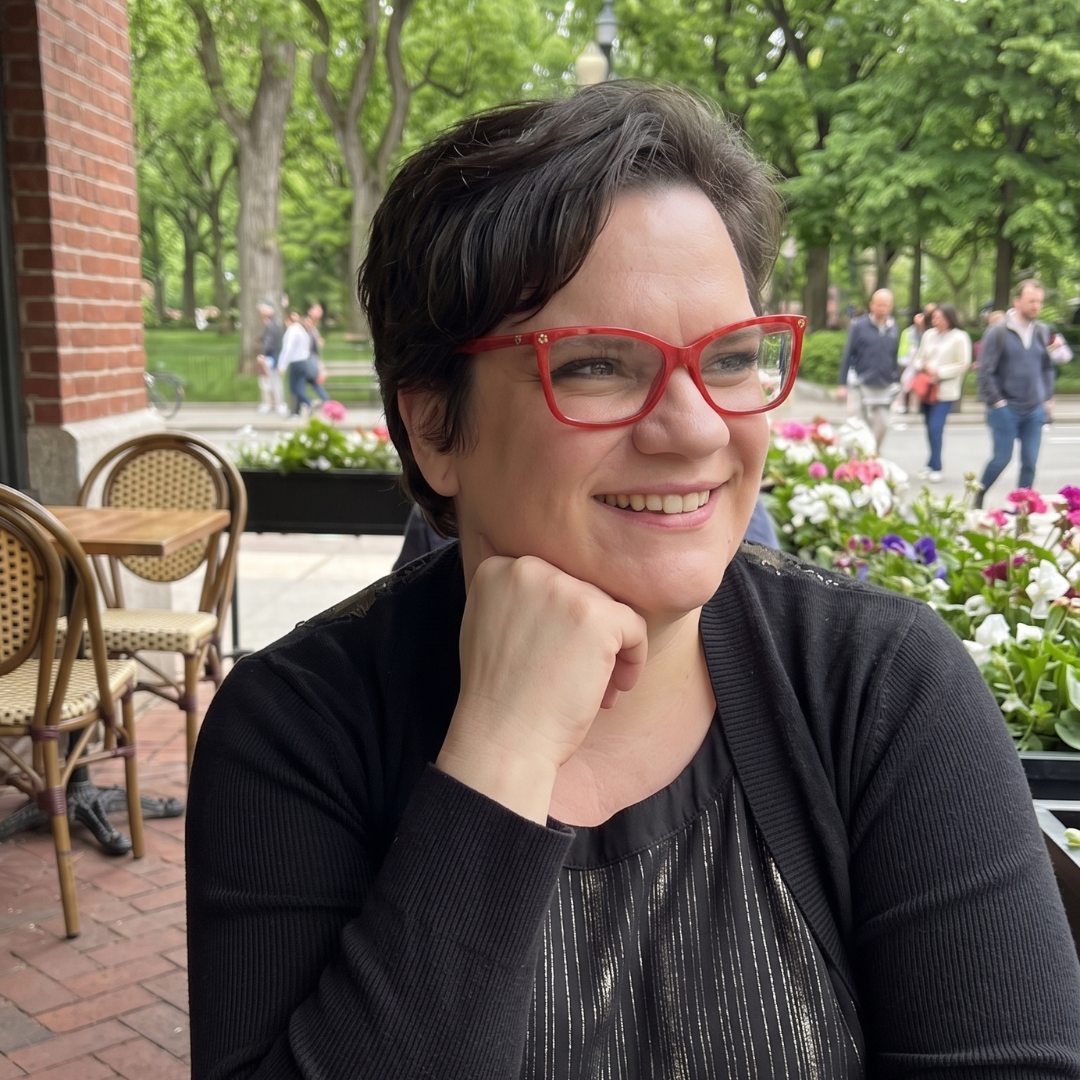
How to Pivot Your Career With the Science of Vision Boarding: Janet Tanguay on Where Science Meets Woo
Most business owners and professionals reach a point where the next step is fuzzy. A career has run its course, a business needs to change direction, the kids have left home, or retirement is close, and the question of what comes next sits there without a clear answer. Plenty of capable people try to think their way through it, and the thinking tends to circle back to every reason the new idea might not work.
Janet Tanguay is the CEO of Hammock Way of Life, where she helps clients manifest their dreams faster through vision boarding and strategic planning. She is an SBA certified business advisor, a creativity coach, a mixed media artist, and a record label owner. She is the author of Hammock Way of Life: Leaping Toward Joy and the children's books "Be Bee" and "Dustbunnies Don't Eat Carrots," and she has built a global community of Certified Vision Board Leadership Coaches on five continents. On this episode of The Amanda Kaufman Show, Janet and Amanda talk about how vision boarding became a catalyst for career pivots, the neuroscience behind it, and what Janet calls the place where science meets woo.
Vision Boarding Can Be the Catalyst for a Career Pivot
Vision boarding is a visual way to look at where you want to go with your life, with a target and a plan so you know how you will get there. For many of Janet's clients, it became the catalyst for figuring out what came next.
How It Matters: Janet owned an art business called Art and Soul for a long time and has worked with creatives her whole life. During the pandemic, businesses had to pivot, and the people she worked with wanted to imagine what came next by putting it down on paper in a visual way, through drawing or writing. Some of them came out of the pandemic and went back into careers, and the vision board became the catalyst for those pivots.
How to Do It: Use the board to name the target first. Janet describes it as figuring out where someone wants to go next, whether that is starting a business, starting a new career, pivoting in some way, facing an empty nest, or heading into retirement. Once the target is visible, the plan to get there has something to aim at.
Common Mistake: Treating a pivot as something to figure out alone and in isolation. Janet started getting invited into companies because teams were working in silos, and many people still do not know each other the way they used to. Vision boarding brought people back into connection while they worked out what was next.
The Science of Vision Boarding Starts With What Your Brain Notices
Janet points to a growing body of neuroscience around how seeing images and hearing words shifts something in the brain toward making it a reality. Her go-to example is the new car you suddenly see everywhere once you have decided you want it.
How It Matters: Amanda calls herself a scientific skeptic who was raised to say "show me the science." What sold her on vision boarding was psychological bias. Biases are well documented, and when someone is biased toward negativity, comparison, or judgment, they see more of those things. Vision boarding slows a person down long enough to clarify what good opportunities look like, so they are more receptive when those opportunities appear.
How to Do It: Put the things you want on paper and in writing so your brain has something specific to notice. Janet adds a readiness factor: getting ready to receive something, and feeling into it, rather than only thinking about it.
Common Mistake: Dismissing the practice because some of its language sounds unscientific. Janet acknowledges that ideas like The Secret, The Power of Positive Thinking, and Think and Grow Rich have been around forever. Amanda's view is that more and more of those ideas are converging with what the science shows.
Negative States Keep People Stuck, and Language Shapes the State
The emotional state a person stays in tends to be the state they keep getting. Janet sees sarcasm, bullying, dismissive talk, jealousy, anger, shame, guilt, and fear all come into play in her workshops.
How It Matters: Janet's example is someone who wants love in their life and sees a couple walking down the street. One reaction is an eye roll at how lovey-dovey they are, and that keeps the person in a negative state. The other is "that's going to come to me someday." The same applies to a business, money, or anything else someone wants. Janet says the clients who do this work on a quarterly basis have manifested all sorts of great things.
How to Do It: Treat vision boarding as practice for proactive thought patterns. Amanda points out how easy it is to default to the negative, partly because people want to be right. She was reminded of the phrase "don't believe what you think," and she sees the board as a chance to choose a different response on purpose.
Common Mistake: Writing the whole thing off as a kindergarten project. Janet hears that line in her workshops, and those skeptics usually end up being her biggest advocates.
A Dreamer Needs a Spreadsheet, Too
Realism and positivity can work together. Amanda has long carried around an idea for a t-shirt or mug that says "dreamer with a spreadsheet," and it captures what Janet learned from years of working with lenders.
How It Matters: When startups brought Janet their ideas, lenders would immediately list everything that could go wrong, like a game of whack-a-mole. That was their role, since they were lending the money. Janet chose to be the voice of positivity, because she believes something can gain real traction when someone is passionate enough about it.
How to Do It: Keep the spreadsheet and keep the dream. Amanda sees real value in pragmatism and in assessing things from a reality standpoint, and she keeps coming back to one question for the skeptics: "But what if it does work?" Janet points to Thomas Edison, who kept trying until something stuck. The entrepreneurs she sees succeed are resilient and persistent, and they pivot when they need to.
Common Mistake: Sucking all the dreaming out. Most people can find a million reasons an idea will not work, and being right about that comes with a little jolt of "told you so." It rarely comes with anything else.
Structure Makes Creative Work Easier to Say Yes To
Vision boarding lands in business settings when the creative, immersive experience comes packaged with structure. Amanda sees this as one of the most impressive parts of what Janet has built.
How It Matters: Humans make the hiring, buying, and firing decisions in every business. A creative practice with real structure behind it is far easier for a business-minded person to say yes to than someone walking in with a stack of magazines and glue sticks. Hammock Way of Life coaches work with vision board kits, manifestation journals for kids, teens, and adults, a community that shares what works in their workshops, and tools that include AI-related resources and business models.
How to Do It: Build on what already exists. Amanda got a massive lift in all of her businesses by leveraging things other people built and wrapping her personal brand around them. Janet's certified coaches are independent contractors who often hold other certifications too, from DISC and Myers-Briggs to wellness and money coaching, and they integrate vision boarding into that work.
Common Mistake: Assuming the numbers people do not want the creative side. Janet has worked with groups of engineers, attorneys, and insurance agents, and she says they do not want the science, because they do the math all day long. They want the woo. Bands and a community garden have come out of her vision boarding sessions.
Find Your Sign and Pay Attention to It
Janet is a big believer in signs and in following them, and she teaches it more and more in her workshops. Her advice is to choose a sign and then actually watch for it.
How It Matters: Janet has big dreams for her current business, so she asked the universe to send her eagles if she was on the right path. The first day she went out for a walk, she saw an eagle by the river. Then her neighbor spotted one from his deck, and when she went to the post office for stamps, they had eagle stamps. She knows she is on the right path.
How to Do It: Pick your sign. Janet says it could be a feather, a certain kind of bird, a license plate, or someone's name. Then keep your head up.
Common Mistake: Going through the day head down. Janet says that when someone is not paying attention, the signs go right past them. Amanda tied this to what she calls the woo: wonder, opportunity, and optimism. A lot of people miss amazing opportunities because they are not letting the woo in.
Conclusion
Janet Tanguay's approach to vision boarding gives a career pivot both a target and a plan. Use the board to see where you want to go next. Lean on the science of what your brain notices, and practice the proactive thought patterns that keep you out of negative states. Keep the dreamer and the spreadsheet in the same room. Give the creative work enough structure that a business-minded person can say yes to it, and pay attention to the signs that show up once you know what you are looking for.
The next step does not have to be fully figured out before you start. Put it on paper, and watch for your eagles.
To hear the full conversation with Janet Tanguay, listen to Episode 382 of The Amanda Kaufman Show on YouTube, Apple Podcasts, or Spotify.
Frequently Asked Questions
What is vision boarding?
Vision boarding is a way to visually look at where you want to go with your life, with a target and a plan so you know how you will get there. Janet Tanguay's clients use drawing, writing, and images to make that target visible. Her workshops sometimes add sound healing, improv, or LEGO Serious Play.
Can vision boarding help with a career pivot?
Yes. During the pandemic, Janet saw vision boarding become the catalyst for career pivots as people figured out where they wanted to go next. Her clients have used it to start businesses, start new careers, and navigate an empty nest or retirement.
Is there science behind vision boarding?
Janet points to a growing body of neuroscience showing that seeing images and hearing words shifts something in the brain, much like suddenly noticing the car you want everywhere on the road. Amanda's angle is psychological bias: people see more of what they are biased toward, so clarifying good opportunities makes them easier to recognize.
What does "where science meets woo" mean?
It is how Janet describes her approach. Vision boarding can be playful, with tools like sound healing, improv, and LEGO, and it can also be taken seriously from a scientific perspective. Amanda adds her own definition of woo: wonder, opportunity, and optimism.
How can I work with Janet Tanguay or a Hammock Way of Life coach?
The Hammock Way of Life website lists its certified vision board coaches, who are on five continents: https://www.hammockwayoflife.com. Janet's offer for listeners is to bring your vision board to an Energize Your Vision Workshop, where it gets energy, connections, collaborations, feedback, and ideas: https://hammockwayoflife.com/energize-your-vision/. You can also connect with Janet on LinkedIn at https://www.linkedin.com/in/jazzyja and follow Hammock Way of Life on Instagram at https://www.instagram.com/hammockwayoflife.