Build a Bold Outreach Machine for Coaches
Executive Coaching, Sales Strategy, Client Outreach
How to Find Your First 5 Coaching Clients Through Referrals (Without Cold Outreach or Ads)
Most business owners launching a new offer have a very clear picture of how it is going to sell. There is a webinar, then a list, then a pitch, then the client. The picture is so clear it feels like a plan. Then the offer goes to market, the picture meets reality, and it becomes very hard to tell which piece of the plan is actually the problem.
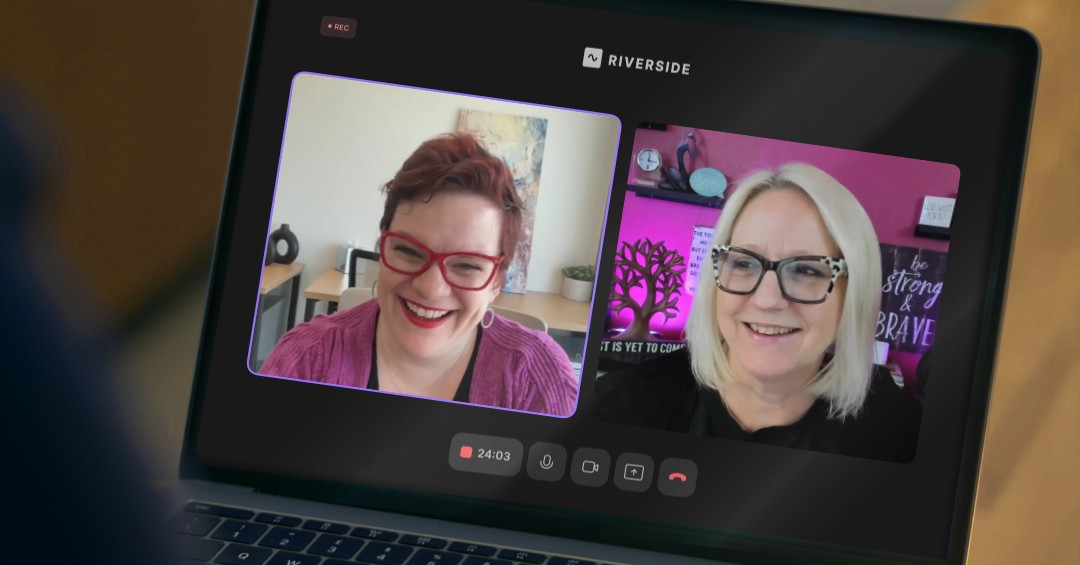
In this Here, Let Me Do That For You episode of The Amanda Kaufman Show, Amanda coaches Clairvenu Inner Circle member Kathi Kulesza through exactly that moment. Kathi is a leadership strategist, executive coach, and keynote speaker who is repositioning her business around strategic self-advocacy for high-performing leaders who feel invisible at work. She has a new eight-week program, a working price, and a corporate webinar strategy she is about to pour months into. Over one conversation, Amanda breaks the launch into testable pieces, unpacks the six parts of an offer, scores three possible sales paths against each other, and lands on the one that can produce five clients fastest. Here is the framework, step by step.
Confidence Follows Clarity, Not the Other Way Around
Kathi's core teaching is that telling people to "be more confident" rarely works, because the confidence gap is usually a clarity gap. People do not see the value they bring, so they cannot advocate for it.
How It Matters: When high performers cannot articulate their contributions, they respond by working harder and hoping someone notices. That path leads to overfunctioning, burnout, and eventually pulling back, which shrinks the very opportunities they were hoping to earn.
How to Do It: Kathi has her clients build what she calls a Value Vault, a running record of contributions, wins, and impact. Once the evidence is written down, sharing it becomes a normal update rather than bragging, and the people around you start to see what you bring.
Common Mistake: Most people try to fix a visibility problem with a mindset pep talk. Without proof in hand, the belief does not stick. Clarity about the value comes first, and the confidence follows.
Treat a New Launch as a Hypothesis and Name Every Assumption
Amanda's first move is to reframe Kathi's plan as a hypothesis rather than a certainty. Her corporate webinar strategy actually contains at least three separate bets: that women's groups inside companies want outside speakers, that they want this specific topic, and that webinar attendees will book private calls and buy the program.
How It Matters: A launch that bundles several unproven assumptions together cannot be diagnosed when it stalls. If the whole process runs end to end with no checkpoints, there is no way to know which link broke.
How to Do It: Write the plan out as a chain of assumptions, then test them in blocks. Amanda calls this testing it backwards: instead of starting with "will strangers respond to my outreach," start with "will the right person buy this offer at this price." Get a lazy sale of the core offer first, then add webinars, sales letters, and other front-end mechanisms.
Common Mistake: A lot of entrepreneurs test from the front, building the list and the webinar and the funnel before anyone has ever paid for the thing at the end of it.
An Offer Has Six Parts, and Most People Only Build One of Them
Amanda walks Kathi through the six Ps of an offer: the person, the problem, the promise, the process, the price, and the protection.
How It Matters: Each P is its own assumption. The person is who the offer is perfect for. The problem is the before. The promise is the after you can reasonably expect. The process is how you deliver it. The price is what that person is willing and able to pay. Protection is what calms the "did I just make a mistake?" feeling that shows up right after someone commits, whether that is a guarantee, a warranty, or bonuses stacked around the core offer.
How to Do It: Validate the person, problem, promise, and price before over-building the process. For Kathi, that meant checking whether a quiet, heart-led corporate employee actually feels the pain of invisibility strongly enough to invest in solving it, and whether the promise of a two percent raise that compounds every year is the right after to sell.
Common Mistake: Most entrepreneurs build out the process in enormous detail, with every module and check-in mapped, before validating the other five pieces. The result is a beautiful program nobody has agreed to buy yet.
Never Sell From Your Own Wallet
Kathi's hesitation about her $1,250 price point had nothing to do with the market. As she put it, she was deciding for her clients, in her own head, that it sounded like a lot of money.
How It Matters: Your bank account, credit score, and money story have nothing to do with your self-worth or your credibility to sell something that works. When pricing gets filtered through the seller's own wallet, prices drop, sales calls get harder, and the business ends up targeting people who share the same constraints.
How to Do It: Amanda's benchmark is that high ticket for a private consumer runs roughly $500 to $3,000, and that $1,250 is well below the impulse-buy television at Costco. Corporate buyers expect an entirely different scale, so a program sold to a company might be priced per ten or twenty seats rather than per person. And there is a middle path Kathi has already seen work: attendees getting their employer to cover the fee. When people want something, they get resourceful.
Common Mistake: A lot of business owners follow the advice to sell to who they were five years ago. Amanda considers that one of the worst pieces of entrepreneurial advice, because your client very likely is not you, and it is far easier to sell to someone with the discretion to spend than to convince someone who does not have it.
Score Every Path With Impact, Confidence, and Ease
Instead of insisting on the corporate webinar path she had pictured, Amanda has Kathi list every route to the goal of five pilot clients by September 1, then score each one on Impact, Confidence, and Ease.
How It Matters: Goals rarely fail because of the goal. They fail because the owner insists on one particular path to get there. When several paths are scored side by side, the best one is usually obvious, and it is frequently not the one that was in the original vision.
How to Do It: Rate each option from one to five on how much impact it would have, how confident you are it would work, and how easy it is to execute, then add the scores. On the call, the corporate webinar path scored 8 (high impact, moderate confidence, very hard to execute), running ads to the webinar scored 10, and a referral strategy through Kathi's existing network scored 13. Referrals won, so that is the process to run first.
Common Mistake: Most people pick the process that feels most like a "real" business strategy rather than the one most likely to produce a result this month. The scoring takes the ego out of the decision.
Volume Is What Turns Noise Into Signal
Choosing referrals is only half the answer. Amanda's follow-up is about reps: three asks will not tell you anything, thirty probably will not either, but a hundred to three hundred conversations will produce a clear signal.
How It Matters: A process with only a trickle of energy running through it never generates enough feedback to learn from. The signal gets lost in the noise of everything else competing for attention, and the owner concludes the strategy failed when it was never actually tested.
How to Do It: Amanda started her own business with eight names on a Post-it note. The second person she coached said, "I've got a friend who needs this," and from that point she asked every single person, "Who else do you know that might enjoy a session?" People know people, and the habit of asking grew her network automatically. Kathi's version is a simple message to her champions: "I'm starting a pilot designed to help people move past imposter syndrome and build their self-advocacy. Who should I be talking to if we're aiming to start September 1?"
Common Mistake: A lot of business owners only give a handful of people the chance to support them, then decide their network is too small. Amanda also recommends pre-qualifying with questions about employment and past investments, letting people say no, and following up with "was there another number that would have been a yes?" because the no is often about time or trust rather than price.
Conclusion
The path from a new idea to five paying clients is shorter than it looks when the launch is broken into pieces. Get clear on the value first, because confidence follows clarity. Treat the plan as a hypothesis and test it backwards, starting with the offer. Check all six parts of that offer, not just the process. Price from the client's world rather than your own wallet. Score every possible path on impact, confidence, and ease, and then run the winner with enough volume to actually learn something. Kathi walked in with a corporate webinar plan and walked out with a referral campaign and a September 1 deadline. Whatever you are launching next, there is a version of that shortcut waiting in the people you already know.
To hear the full conversation with Kathi Kulesza, listen to Episode 356 of The Amanda Kaufman Show on YouTube, Apple Podcasts, or Spotify.
Frequently Asked Questions
How do I get my first coaching clients without running ads?
Start with the people who already know and trust you, and ask each of them who they know. On the episode, a referral strategy scored higher than both corporate outreach and paid ads on impact, confidence, and ease combined. The key is volume: reach out to a hundred or more connections rather than a handful, and make the ask specific, including who the pilot is for and when it starts.
What are the six Ps of an offer?
The six Ps are person, problem, promise, process, price, and protection. Person is who the offer is perfect for, problem is the before state, promise is the after you can reasonably expect, process is how it is delivered, price is what that person is willing and able to pay, and protection is what reduces the risk of committing, such as a guarantee or bonuses. Amanda recommends validating the first five before over-building the process.
How should I price a high-ticket coaching program?
Price for the person you are serving, not from your own comfort level. Amanda's rule of thumb is that high ticket for a private consumer typically runs $500 to $3,000, while corporate buyers expect a different scale entirely and may buy in blocks of seats. Ask qualifying questions before the pitch, let people say no, and follow up to find out whether the no was actually about price.
What is the ICE scoring method?
ICE stands for Impact, Confidence, and Ease. You list every possible process for reaching a goal, rate each one from one to five (or one to ten) on each factor, and add the scores. The highest total is the path to execute first. It is a quick way to choose between competing strategies without defaulting to the one you imagined originally.
How can I learn more from Kathi Kulesza about visibility and self-advocacy?
Kathi offers a free 45-minute webinar for high-performing professionals who are doing the work but not getting the recognition, rewards, and opportunities they deserve. It introduces her Value Vault approach to documenting and sharing your contributions. You can find the webinar and her ApologyFree Leadership resources at https://www.kathispeaks.com/ [WEBINAR LINK TO BE ADDED].
Build a Bold Outreach Machine Before You Ever Sell a Seat
High-performing women don’t wait for permission, and your client outreach shouldn’t either. If you’re an executive coach or consultant, you don’t need “proof of concept” before you build a powerful outreach engine. You need clarity, courage, and a system that sells while you’re still refining the offer. That’s how serious players move.
Your Outreach Machine Comes Before Your First Dollar
Waiting to “see if people are interested” before you build outreach is how powerful offers die quietly. Your job as an executive coach is not to be timidly available; it’s to be strategically visible. A big outreach machine is simply a repeatable, measurable way to:
Consistently reach your exact-fit clients (high-performing women in leadership and high-stakes roles)
Move them through clear sales paths
Collect data on what converts before you obsess over perfection
You design the machine first, then you tune it. That’s how serious sales strategies work in every high-performance environment—from tech to finance. Coaching is no different.
Test Sales Paths Like a Scientist, Not a People-Pleaser
High-performing women are used to being evaluated. In your outreach, you flip that dynamic: you evaluate the paths people take to buy. Testing sales paths means intentionally experimenting with how prospects move from stranger to client:
LinkedIn DMs → value-packed resource → short consult → paid strategy session
Speaking engagement → follow-up sequence → executive roundtable → private coaching
Referral introduction → diagnostic call → proposal → retainer
You’re not “trying to see what sticks.” You’re engineering evidence. Each path is a hypothesis about how your best-fit client prefers to make decisions. Your outreach machine tracks which path delivers the most qualified, decisive buyers—and you double down on that.
Build Your Offer Using the Six Ps—Then Sell It Loudly
A bold outreach engine needs a sharp offer. Enter the Six Ps of an Offer—a simple lens that keeps you from hiding behind vague “coaching” language:
Person: High-performing women in executive or emerging executive roles.
Problem: They’re overextended, under-recognized, and tired of carrying teams without matching authority or compensation.
Promise: Clearer authority, visible impact, and bigger opportunities within 90 days.
Process: A structured executive coaching framework—diagnostic, strategy, implementation, and feedback cycles.
Proof: Client stories, metrics (promotions, raises, board seats), and your own executive track record.
Price: Positioned as a strategic investment, not a “nice-to-have” wellness perk.
When these six Ps are explicit, your outreach stops sounding like a whisper and starts sounding like a boardroom decision. Clarity sharpens your message. Sharp messages convert.
Confidence Follows Clarity—Not the Other Way Around
You’re not “missing confidence.” You’re missing clarity. Once you know exactly who you serve, what you solve, and how you deliver it, confidence is a byproduct, not a prerequisite. In outreach, that looks like:
Direct messages that state the value, not apologize for your existence.
Sales calls that sound like strategic conversations, not auditions.
Pricing that holds firm because you understand the cost of inaction for your clients.
📌 Key Takeaway: Stop chasing confidence. Build ruthless clarity, and your outreach will carry the authority your clients are already looking for.
Strategic Self-Advocacy: Sell Like the Executive You Coach
Strategic self-advocacy is not bragging; it’s modeling. High-performing women are watching how you talk about your work. If you minimize your results, you’re teaching them to do the same. Your outreach should:
Name the outcomes you create in concrete language—promotions, revenue, team retention, strategic visibility.
Show up where decision-makers are: executive networks, industry events, curated introductions.
Speak in the language of impact and risk, not “sessions” and “packages.”
You’re teaching your clients to advocate for themselves in rooms that weren’t built for them. Your outreach is your own executive presence in action.
Build a Value Vault That Powers Every Touchpoint
A Value Vault is your private library of assets that prove and demonstrate your value on demand. It feeds your outreach so you’re never scrambling for “something to send.” Inside your Value Vault, you might have:
One-page case briefs on client wins (before/after metrics, context, timeline).
Short frameworks for executive communication, stakeholder management, or strategic visibility.
Scripts and email templates for common executive scenarios your clients face.
Your outreach machine pulls from this vault constantly—DMs, follow-up sequences, nurture content, and sales conversations all get sharper because you have proof and perspective at your fingertips.
Prioritize with Impact, Confidence, Ease Scoring
You don’t have time to chase every shiny outreach idea. Use Impact, Confidence, Ease (ICE) scoring to decide what to build first:
Impact: If this works, how big is the payoff in revenue, authority, or access?
Confidence: How certain are you this will resonate with your high-performing women audience, based on what you already know?
Ease: How quickly and simply can you execute this with excellence?
Score each outreach idea from 1–10 in each category, add them up, and start with the highest total. That’s how you build an outreach machine that grows fast without burning you out.
Your Next Move: Act Like the Offer Is Already Proven
The market doesn’t reward the coach who waits. It rewards the coach who builds. Design your outreach machine now: define your Six Ps, commit to testing sales paths, stock your Value Vault, and prioritize with ICE scoring. Let clarity lead, and let confidence follow. High-performing women are ready for coaching that matches the scale of their ambition. Your outreach has one job—make sure they can’t miss you.